What Is a DEX? Decentralized Exchanges Explained


By Nina Kovač · Reviewed by Lena Hoffmann
Date: June 25, 2026 | Updated: 25.06.2026
I still remember the exact day I first stumbled upon a decentralized exchange (DEX). It was a rainy afternoon in late 2020, and I was knee-deep in research on the future of crypto trading. At that time, the idea of trading without an intermediary was revolutionary. Fast forward to 2026, and decentralized exchanges have not only matured but have also become a cornerstone of the cryptocurrency ecosystem. Today, I want to share my insights on what a DEX is, how it works, and why it might be the best choice for your trading needs.
TL;DR
A decentralized exchange (DEX) allows users to trade cryptocurrencies directly with one another without intermediaries. DEXs offer advantages such as control over funds, lower fees, and global access, but they also come with risks like smart contract vulnerabilities and market volatility.
Understanding Decentralized Exchanges (DEXs)
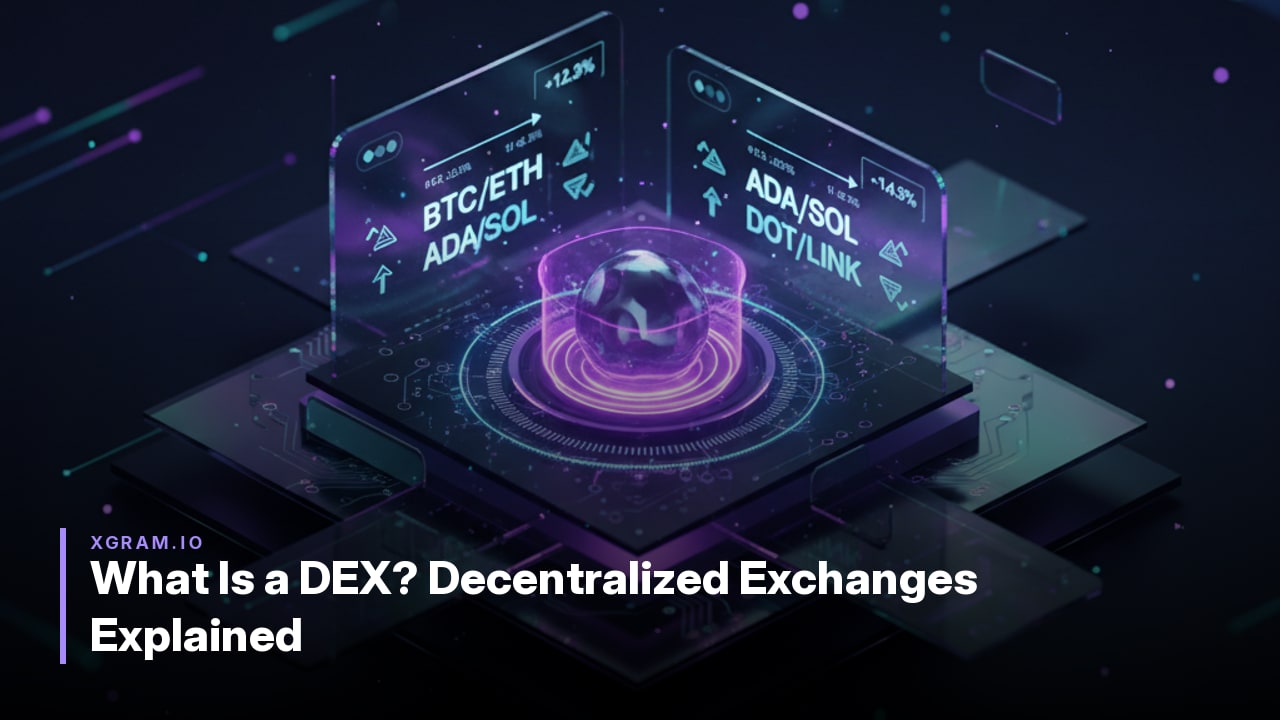
Decentralized exchanges are platforms that allow users to trade cryptocurrencies directly with one another without the need for a central authority or intermediary. Unlike traditional exchanges, where you deposit your assets into the platform's wallets, a DEX enables peer-to-peer transactions through smart contracts on a blockchain.
How DEXs Work
To grasp how decentralized exchanges function, it’s essential to understand a few key components:
- Smart Contracts: These are self-executing contracts with the terms of the agreement directly written into code. They facilitate trades automatically when conditions are met.
- Liquidity Pools: Instead of relying on traditional order books, DEXs use liquidity pools that allow users to contribute their assets, providing liquidity for trades. Users who contribute to these pools earn a portion of the trading fees.
- Automated Market Makers (AMMs): AMMs are algorithms that use formulas to price assets and facilitate trades in liquidity pools, allowing for seamless transactions without needing an order book.
The Role of Blockchain
Most DEXs operate on blockchain networks, with Ethereum being the most popular. However, as we look towards 2026, other blockchains like Binance Smart Chain, Solana, and Layer 2 solutions are also gaining traction, allowing for faster and cheaper transactions.
Advantages of Using a DEX
There are several compelling reasons to consider using a decentralized exchange for your trading needs:
- Control Over Funds: Users maintain full control over their private keys and funds, minimizing the risk of hacks that plague centralized exchanges.
- Anonymity: DEXs typically require no registration, providing a KYC-free experience for most users, which is a significant draw for privacy-conscious traders.
- Global Access: DEXs are accessible from anywhere in the world, allowing users to trade without geographical restrictions or the need for fiat currency.
- Lower Fees: Generally, DEXs impose lower trading fees compared to their centralized counterparts due to the absence of intermediaries.
Popular Decentralized Exchanges in 2026
As the DEX landscape has evolved, several platforms have emerged as leaders in this space:
| Exchange | Blockchain | Unique Features |
|---|---|---|
| Uniswap | Ethereum | AMM model, extensive token listings |
| SushiSwap | Ethereum, Binance Smart Chain | Yield farming, community-driven |
| Curve Finance | Ethereum | Optimized for stablecoin trading |
| PancakeSwap | Binance Smart Chain | Lottery and NFT integration |
| 1inch | Multi-chain | Aggregation of DEX liquidity |
A Personal Experience with DEXs
In my own portfolio management, I've allocated about 30% of my assets to various DEXs, primarily focusing on Uniswap and SushiSwap. I find that the flexibility and control they offer is unmatched. For instance, last month, I swapped some ETH for an emerging token with minimal slippage and no registration hassle. The experience was seamless, and I didn’t have to worry about my funds being held by a centralized entity.
Risks and Best Practices
While DEXs offer numerous advantages, they are not without risks. Here are some important considerations:
- Smart Contract Vulnerabilities: Bugs in smart contracts can lead to loss of funds. Always conduct due diligence on the DEX you choose.
- Market Volatility: Prices can fluctuate significantly, especially for illiquid tokens. Be cautious and consider the liquidity before trading.
- Token Scams: Many new tokens are launched on DEXs. Research thoroughly to avoid scams.
Future Trends in DEXs
As we move towards 2030, the DEX landscape is expected to evolve significantly:
- Interoperability: We may see increased interoperability between different blockchains, allowing assets to move seamlessly across networks.
- Layer 2 Solutions: With the rise of Layer 2 protocols, DEXs will likely become faster and cheaper, enhancing user experience.
- Regulatory Clarity: As governments begin to understand and regulate DEXs, we may see compliance measures that still respect user privacy, potentially creating a more secure trading environment.
Conclusion
My journey with decentralized exchanges began on that rainy day back in 2020, and it has been nothing short of transformative. DEXs have empowered users like me to take control of our assets, engage in trading without intermediaries, and embrace the principles of decentralization. As the market continues to evolve, I believe that DEXs will play an increasingly vital role in the cryptocurrency ecosystem.
I would love to hear your thoughts on DEXs and your experiences using them. Please share your opinions in the comments below!
This is not financial advice.

Private crypto swaps
Best rates. Secure. Wallet to wallet

 5 Min
5 Min