1. Strategy in a Nutshell
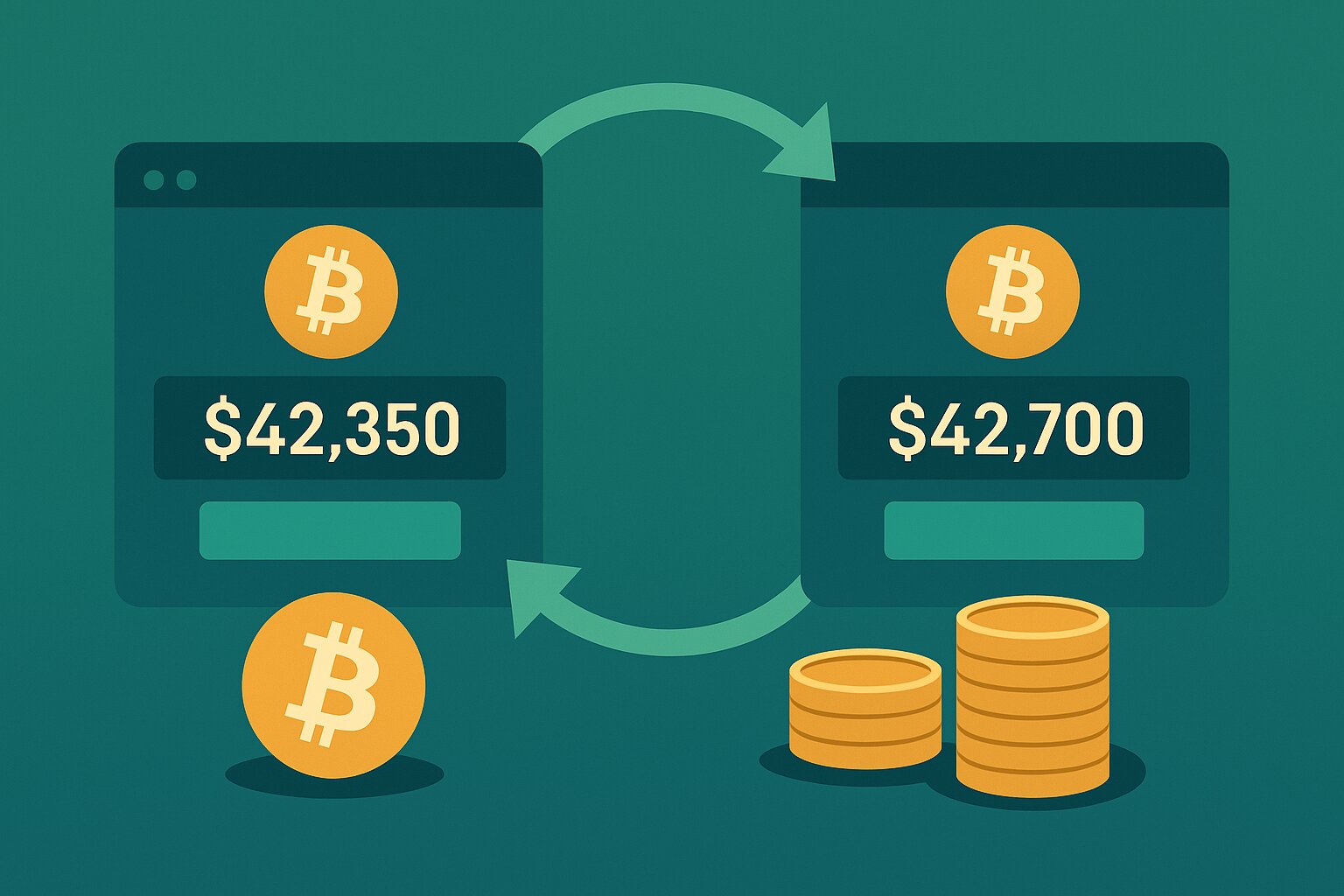
Cross-exchange arbitrage means buying an asset on Exchange A at a lower price and (near-)simultaneously selling it on Exchange B at a higher one. The goal is to lock in the price gap before the market evens it out.
2. What You’ll Need
- At least two CEXes with decent liquidity (e.g., Binance + OKX or Bybit + MEXC).
- A spreadsheet (Google Sheets / Excel) to track spreads and fees.
- Price monitoring via built-in market widgets, public aggregators (CoinGecko, CMC), or mobile-app alerts.
- Optional cold wallets if you prefer holding assets off-exchange between sessions.
Tip: preload each exchange with the asset you plan to arbitrage; it removes deposit delays when the window opens.
3. Step-by-Step Trade Flow
- Build a watch-list.
Record ticker, Ask on A, Bid on B, trading fees, withdrawal fees, network confirmation time. - Calculate the net spread.
[(Bid_B – Ask_A) ÷ Ask_A × 100 %] minus total fees. Anything above ~1 % is worth a look on stable order books. - Check depth.
If only USDT 50 is available at the quoted prices, slippage will eat the profit. - Lock price on Exchange A.
Place a market or close-to-market limit order. - Move the asset fast.
Use quick networks (TRC-20, BEP-20, Polygon) or keep mirrored inventories on both exchanges to skip transfers. - Close the mirror trade on Exchange B.
Sell (or buy back) the identical amount immediately. - Log the result.
Enter real fills and fees to measure clean margin; 0.5–1 % on ≥ USDT 2 000 per cycle is meaningful for manual work.
4. Hidden Pitfalls
- Fees matter. Exchange-token discounts (BNB, OKB) or VIP tiers can turn a borderline spread profitable.
- Network congestion. ERC-20 transfers during hype cost time and money; keep a fast chain in reserve.
- Withdrawal holds. Large or fresh accounts can be flagged for manual AML review—diversify capital.
- Spread swing. The gap can vanish while funds are in transit; shorten the time between legs.
- Volume caps. Non-KYC accounts may face low daily withdrawal limits—plan cycle sizes accordingly.
5. Classic Profit Formula
P = (Bid_B − Ask_A) × Q
      − Fee_trade_A − Fee_withdrawal
      − Fee_deposit (if any) − Fee_trade_B
ROI = P ÷ (Ask_A × Q) × 100 %
Positive ROI after all fees = trade justified.
6. Quick Pre-Trade Checklist
- Both accounts fully verified and withdrawal limits sufficient.
- Small balance of exchange tokens for fee discounts.
- Spreadsheet holds current fees and 3–5 monitored pairs.
- At least three “paper” cycles tested.
7. When to Stand Down
- Net spread < 0.3 % with total fees ~0.1 % each way.
- One exchange introduces dynamic withdrawal fees.
- A native bridge between the two exchanges kills latency, equalising prices almost instantly.
8. Takeaway
Manual cross-exchange arbitrage isn’t an instant money tap; it’s a craft of discipline and speed. With nothing more than two exchange accounts, a spreadsheet and basic order-book skills, you can extract 0.5–1 % per cycle. The edge comes not from code but from cold arithmetic—count every fee, respect limits, and remember: sometimes not entering is the best trade of the day.

Private crypto swaps
Best rates. Secure. Wallet to wallet


 5 Min
5 Min