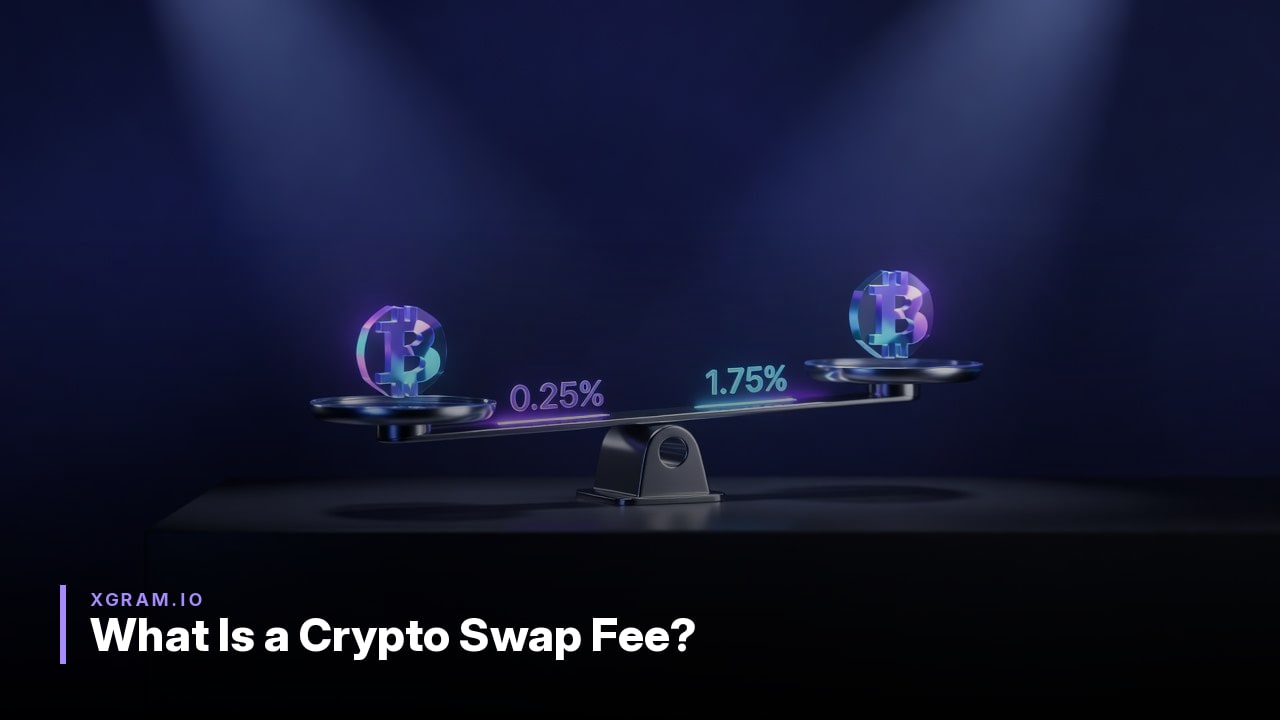
A crypto swap fee is the charge applied when you exchange one digital asset for another on a trading platform or decentralized protocol. These fees cover liquidity provision, network operations, and platform services, and they directly affect the final amount you receive.
Understanding the Components of a Crypto Swap Fee
Every swap involves multiple cost layers. The largest portion on decentralized exchanges is usually the liquidity provider fee, typically 0.1% to 0.3% of the trade value. Network gas fees add another variable cost that fluctuates with blockchain congestion. Centralized platforms often bundle these into a single maker or taker fee ranging from 0.05% to 0.5%. As of August 2026, Ethereum mainnet gas for a simple swap can still exceed $8 during peak hours, while layer-2 solutions like Arbitrum keep the same transaction under $0.50.
Additional hidden costs appear in the form of price impact and slippage. Large orders on thin order books move the market price, effectively increasing the total cost beyond the stated fee. Smart routing tools now scan multiple venues to reduce this impact before execution.
Fee Structures Across Major Platforms
Fees vary significantly depending on whether you use a centralized exchange, a decentralized protocol, or a hybrid aggregator. The table below compares average costs for a $10,000 USDT-to-ETH swap in mid-2026.
| Platform Type | Typical Fee Rate | Gas/Network Cost | Price Impact (mid-size trade) | Registration Required |
|---|---|---|---|---|
| Centralized Exchange | 0.10%–0.40% | $0 (internal) | 0.05%–0.15% | Yes |
| Popular DEX (Uniswap v3) | 0.05%–0.30% | $2–$25 | 0.10%–0.50% | No |
| Aggregator with Smart Hedge | 0.08%–0.25% | $0.30–$4 | 0.03%–0.20% | No for most swaps |
Registration-free platforms such as Xgram stand out because they combine aggregator routing with Smart Hedge rate protection, often delivering the lowest effective cost for mid-sized trades without forcing users to create an account.
How to Calculate Your Actual Swap Cost
Follow these steps to determine the true cost before confirming any swap.
- Enter the exact amount and asset pair into the platform interface.
- Note the displayed fee percentage and any separate gas estimate.
- Check the expected output amount against the current mid-market price to reveal slippage or price impact.
- Compare the same trade on at least two other venues, including one registration-free option.
- Factor in any withdrawal or bridging fees if you plan to move the received tokens off the platform.
Performing this check routinely prevents surprises and highlights when a platform’s headline fee is offset by poor execution quality.
Strategies to Reduce Crypto Swap Fees
Traders can lower costs through timing, routing, and platform choice. Execute during off-peak hours when gas prices drop below the daily average. Use layer-2 networks or sidechains whenever the destination token supports them. Aggregators that automatically split orders across multiple liquidity sources often beat single-venue trades by 0.1%–0.3% on larger sizes.
Platforms offering Smart Hedge features further protect against adverse price movement during the swap window, effectively capping one component of total cost. Xgram integrates this protection into its registration-free swap flow, allowing users to lock favorable rates without creating an account for most transactions.
Risks and Best Practices
- Fee slippage risk: Always review the minimum received amount before confirming.
- Platform risk: Non-custodial aggregators reduce counterparty exposure but still require wallet security hygiene.
- Compliance risk: While Xgram offers no KYC for most swaps, identity verification may be requested in specific compliance situations.
- Best practice: Start with small test swaps when using a new route or network.
- Best practice: Track cumulative fees monthly; if they exceed 1% of portfolio value, reassess routing and timing.
Illustrative Fee Example
Consider a hypothetical $25,000 swap from USDC to SOL on an aggregator using Smart Hedge. The liquidity fee might total $50 (0.20%), network costs $1.20, and price impact $35. The net cost equals roughly 0.34% or $86.25. The same trade on a high-traffic centralized exchange with tier-1 fees could reach $125 once withdrawal charges are included. Registration-free services that combine low base fees with rate protection frequently deliver the best net result for users who value speed and simplicity.
FAQ
What exactly does a crypto swap fee cover?
It compensates liquidity providers, covers blockchain transaction costs, and funds platform operations.
Are swap fees the same on every exchange?
No. Centralized exchanges, DEXs, and aggregators each apply different fee models and additional costs such as gas or withdrawal charges.
Does Xgram require KYC for swaps?
Xgram does not require KYC for most cryptocurrency swaps. However, transactions flagged by compliance procedures may be subject to additional review and identity verification.
How can I see the total cost before swapping?
Reputable interfaces display the expected output amount, fee breakdown, and minimum received figure before you confirm the transaction.
Is it cheaper to swap on layer-2 networks?
Yes, layer-2 solutions typically reduce network fees by 90% or more compared with Ethereum mainnet while maintaining comparable security.
Can Smart Hedge actually lower my fees?
Smart Hedge primarily protects against rate changes during execution, which indirectly reduces the effective cost when markets are volatile.
Should beginners worry about swap fees?
Small traders feel fees more acutely as a percentage of trade size, so choosing low-cost, registration-free options matters even for modest amounts.
Conclusion
Understanding crypto swap fees lets you compare platforms accurately and keep more of your capital working. Registration-free solutions that combine competitive routing with tools like Smart Hedge continue to gain users who want speed without unnecessary account creation. As networks evolve, fee optimization remains one of the highest-ROI skills in crypto trading.
What are your go-to methods for keeping swap costs low? Share your thoughts in the comments below.
This is not financial advice.
This article is for informational purposes only and is not financial, investment, legal or tax advice. Cryptocurrency values are volatile and you may lose money. Do your own research before making any decision.

Private crypto swaps
Best rates. Secure. Wallet to wallet

 5 Min
5 Min