Risks of "Paper Gold" vs. Blockchain-Verified Gold


"Paper gold" refers to indirect or derivative exposure to gold without physical ownership — such as gold ETFs (GLD, IAU), futures contracts, unallocated allocated accounts, gold certificates, mining stocks, or other financial instruments that promise gold price exposure or delivery but rely on counterparty promises, custodians, or leverage. Blockchain-verified gold (tokenized gold) means digital tokens (PAXG, XAUT, KAU, etc.) backed 1:1 by allocated physical gold in audited vaults, with ownership recorded on a transparent, immutable blockchain ledger.
In 2026, the debate between paper gold and blockchain-verified gold centers on counterparty risk, liquidity, transparency, redemption reliability, regulatory treatment, and systemic vulnerabilities. Paper gold dominates institutional and retail exposure (estimated 98% of investor gold claims are paper per industry analysts like Björn Schmidtke of Aurelion), while tokenized gold remains niche (~$4–$5B market cap vs. trillions in paper claims).
This analysis compares the risks head-to-head, drawing on 2025–2026 data from World Gold Council, BIS, UNEP, Chainlink, RWA.xyz, and industry reports.
1. Counterparty Risk — The Core Difference
Paper gold is riddled with counterparty risk — the risk that the issuer, custodian, or intermediary fails to deliver the promised gold.
- Unallocated Accounts: Banks (HSBC, JPMorgan) offer "unallocated" gold — pooled, not specific bars. Rehypothecation (lending the same gold multiple times) creates leverage ratios of 100:1 or higher (BIS estimates). If the bank fails (Lehman 2008-style), claims become unsecured creditor status.
- ETFs (GLD, IAU): Backed by allocated gold, but custodian (HSBC for GLD) holds it. In extreme stress (2008, 2020), redemption queues formed, and paper prices diverged from physical (London delivery delays 4–8 weeks in 2025 per Reuters).
- Futures / Paper Derivatives: COMEX/LBMA paper claims exceed physical ~380:36 million ounces (2025 data). In a run, delivery fails — "force majeure" clauses kick in.
- Mining Stocks: Company risk (operational failures, debt, dilution) plus gold price risk.
Blockchain-verified gold minimizes counterparty risk through:
- Allocated Backing: Tokens represent specific bars (PAXG/XAUT audits verify serial numbers).
- No Rehypothecation: Blockchain immutability prevents double-spending or lending the same gold.
- Self-Custody: Users hold private keys — no custodian can freeze assets (unlike ETF shares or bank accounts).
- Transparency: On-chain proof-of-reserves (Chainlink oracles, Merkle proofs) lets anyone verify backing in real time.
Risks remain for tokenized gold: issuer insolvency (Tether/Paxos), vault theft (rare, insured), or smart-contract bugs (audited, low probability). But overall, counterparty exposure is far lower than paper gold's systemic leverage.
2. Redemption and Delivery Risk
Paper gold redemption is often illusory:
- ETFs: Large redemptions possible but queues form in stress (2020 COVID rush).
- Unallocated accounts: Delivery may take months/years if counterparty fails.
- Futures: Physical delivery rare — most roll contracts or cash settle.
Tokenized gold redemption:
- PAXG/XAUT: Minimum ~430 oz (~$2M) for physical delivery, plus fees/shipping ($500–$2,000+).
- Retail: Sell tokens on-chain — instant liquidity, no redemption needed.
- Risk: Issuer halts redemption (regulatory freeze) or vault issues — but blockchain allows selling to others.
Tokenized gold offers better "exit" liquidity for retail.
3. Liquidity and Market Risk
Paper gold: High liquidity in normal times (GLD ~$60B AUM, daily volume billions). But in crisis, liquidity evaporates (paper prices lag physical).
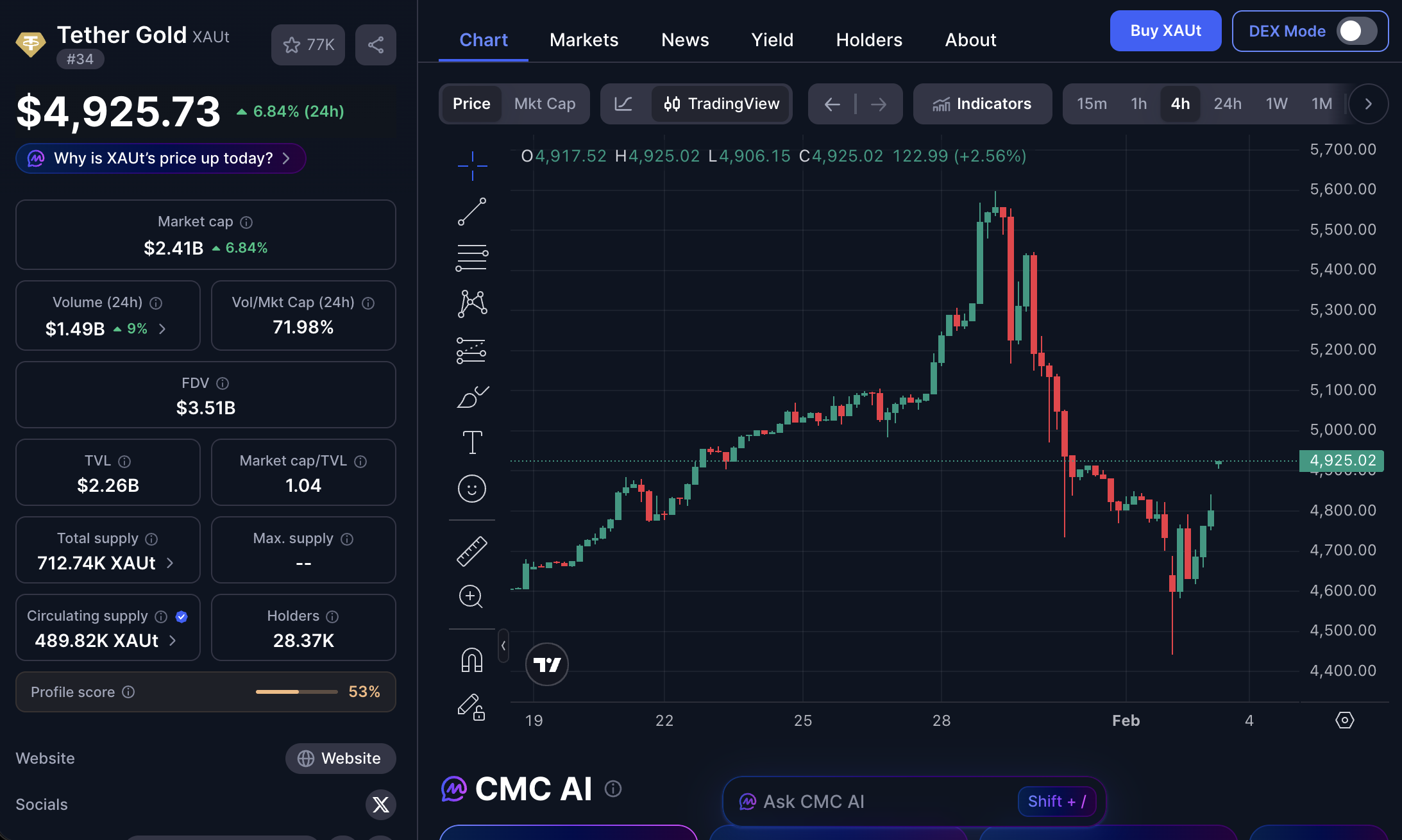
Tokenized gold: Lower absolute liquidity (~$4–$5B market, daily volume $200–$500M). But 24/7, global, no market hours. In 2025 stress, tokenized gold held premiums while paper diverged.
4. Regulatory and Systemic Risk
Paper gold: Regulated (SEC/CFTC for ETFs/futures), but systemic risk high (2008-style contagion).
Tokenized gold: Regulatory gray zone — MiCA treats as ARTs (EU), US may classify as commodities/securities. Risk of delisting/freezes higher for tokens, but decentralized nature resists shutdown.
5. Transparency and Audit Risk
Paper gold: Audits exist but opaque (ETF reports quarterly, unallocated often unaudited).
Tokenized gold: Real-time on-chain verification (Chainlink PoR, Merkle trees) — superior transparency.
6. Conclusion
Paper gold carries massive counterparty, redemption, and systemic risks — 98% of exposure is IOUs with leverage and rehypothecation. Blockchain-verified gold reduces these through allocation, self-custody, and transparency — though it introduces smart-contract and issuer risks. In 2026, tokenized gold is safer for retail self-custody and liquidity, while paper gold suits institutions in normal markets. Hybrid approaches (tokens + physical) balance risks best.

Private crypto swaps
Best rates. Secure. Wallet to wallet

 5 Min
5 Min