Introduction
What Are Decentralized Swap Platforms?
Decentralized swap platforms are protocols that allow peer-to-peer exchanges of cryptocurrencies across blockchains without intermediaries or custodians. They typically use automated market makers (AMMs), liquidity pools, or hybrid models to determine prices and execute trades directly from users' wallets. This ensures self-custody, where users retain control of private keys, enhancing security and privacy in non-custodial swaps 2026.
Why Decentralized Swaps Are Gaining Traction in 2026
In 2026, decentralized swaps continue to surge due to persistent concerns over centralized exchange vulnerabilities, regulatory pressures on CEXs, and the DeFi boom emphasizing interoperability. Cross-chain DeFi growth, driven by advancements in bridges and Layer-2 solutions, enables seamless asset movement. Privacy-focused trades, inflation hedging via quick portfolio adjustments, and rising adoption amid tokenized assets make decentralized swap platforms essential for secure, intermediary-free trading.
Decentralized vs. Centralized Exchanges: Key Differences
Decentralized platforms prioritize non-custodial control and on-chain transparency, contrasting with centralized exchanges' custodial model, faster fiat ramps, and higher liquidity for spot trading. DEXs excel in privacy and cross-chain capabilities, while CEXs offer user-friendly interfaces and institutional tools. In 2026, regulatory scrutiny pushes more users toward decentralized options for reduced counterparty risk.
Overview of Top Options: Focus on Xgram and Uniswap as Market Leaders
Among the best DEX platforms 2026, Uniswap dominates as the premier AMM for Ethereum and multi-chain liquidity, while Xgram.io stands out for instant, non-custodial cross-chain swaps with strong privacy support. Both enable invest in decentralized swaps, but Uniswap focuses on programmable pools, and Xgram emphasizes speed and broad chain coverage, including privacy coins.
How Decentralized Swap Platforms Work
The Swapping Mechanism: How Platforms Facilitate Cross-Chain Trades
Platforms use AMMs for pricing via pool ratios or aggregated liquidity for instant execution. Uniswap employs concentrated liquidity and hooks for custom logic, while cross-chain swaps route through bridges or atomic mechanisms. For example, a trade might involve depositing into a pool, with smart contracts handling execution atomically to prevent failures.
Liquidity and Pooling Process
Liquidity providers add assets to pools, earning fees and sometimes yields. Uniswap V4 uses hooks for dynamic fees and concentrated positions to mitigate impermanent loss. Incentives include farming rewards, with 2026 trends focusing on efficient capital deployment.
Blockchain Integration and Standards
Uniswap supports Ethereum, L2s like Arbitrum/Optimism, and chains via deployments, using ERC-20 standards. Multi-chain support expands interoperability, with EVM compatibility enabling broad wallet integrations.
Audits and Transparency: Importance of Regular Independent Audits and On-Chain Verifications
Audits by firms like PeckShield ensure smart contract integrity. Uniswap's battle-tested code (zero hacks across versions) and on-chain data provide transparency. Regular community governance and open-source code build trust.
Step-by-Step: How to Use and Integrate Decentralized Swaps
Connect a wallet (e.g., MetaMask), select tokens, review rates/slippage, and confirm. For liquidity, deposit pairs and manage positions. Integration with DeFi involves APIs for automated strategies.
Decentralized vs. Centralized Exchanges: In-Depth Comparison
Core Differences: Custody Model and Security
Non-custodial DEXs eliminate single-point failures, unlike custodial CEXs prone to hacks. Decentralized nodes distribute risk.
Fee and Speed Behavior
DEXs incur variable gas/slippage, improved by L2s. CEXs provide fixed fees and instant execution but with withdrawal delays.
Use Cases: Privacy-Focused Trades vs. High-Volume Trading
DEXs suit cross-chain/privacy trades and hedging. CEXs handle fiat and high-volume.
Pros and Cons for Each Type
Decentralized Exchanges Pros:
Full self-custody and privacy.
Transparent, permissionless access.
Cross-chain flexibility.
Cons:
Gas volatility and slippage.
Impermanent loss for LPs.
Learning curve for beginners.
Centralized Exchanges Pros:
Intuitive UI and fiat support.
High liquidity and speed.
Customer support.
Cons:
Custodial risks.
Potential freezes or hacks.
Limited privacy.
Why Choose Decentralized in 2026?
Interoperability protocols and regulatory trends favor DEXs for compliant, efficient trading amid DeFi maturation.
Top Decentralized Swap Platforms in 2026: Xgram vs Uniswap Detailed Review
Xgram (Xgram.io): Features, Security, Liquidity, Fees, User Experience, Market Position in 2026
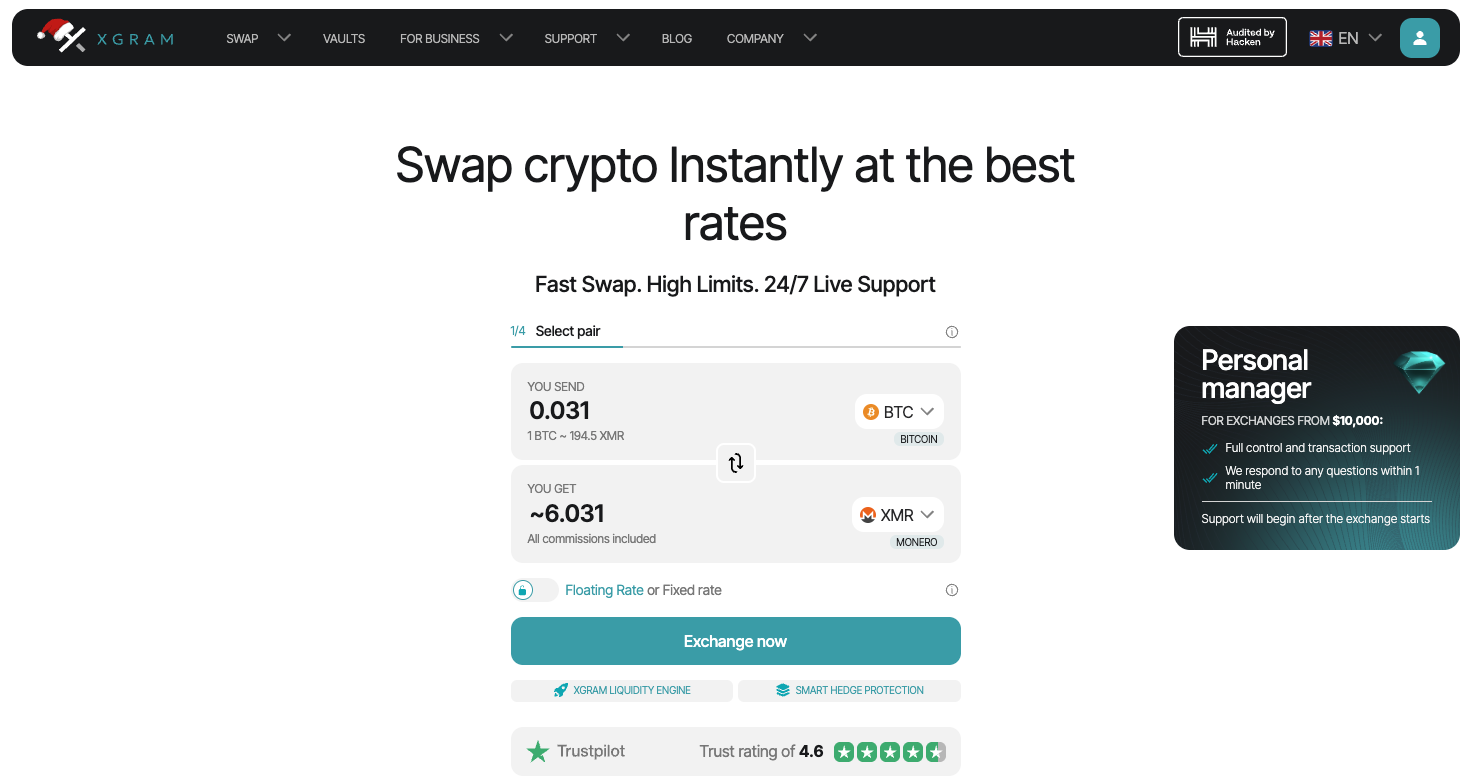
Xgram.io is a non-custodial multichain platform for instant swaps, supporting Bitcoin, Ethereum, Solana, Tron, TON, and privacy coins like Monero. It aggregates liquidity for best rates, offers no registration, AML checks for clean funds, and features like Smart Hedge Protection. Security includes independent audits and self-hosted infrastructure. Fees are low (embedded in rates), swaps complete in minutes, with high limits and personal manager support for large trades. In 2026, Xgram serves privacy-focused users with strong adoption in cross-chain and private swaps.
Uniswap: Protocol Details, Audits, Multi-Chain Support, Fees, 2026 Updates
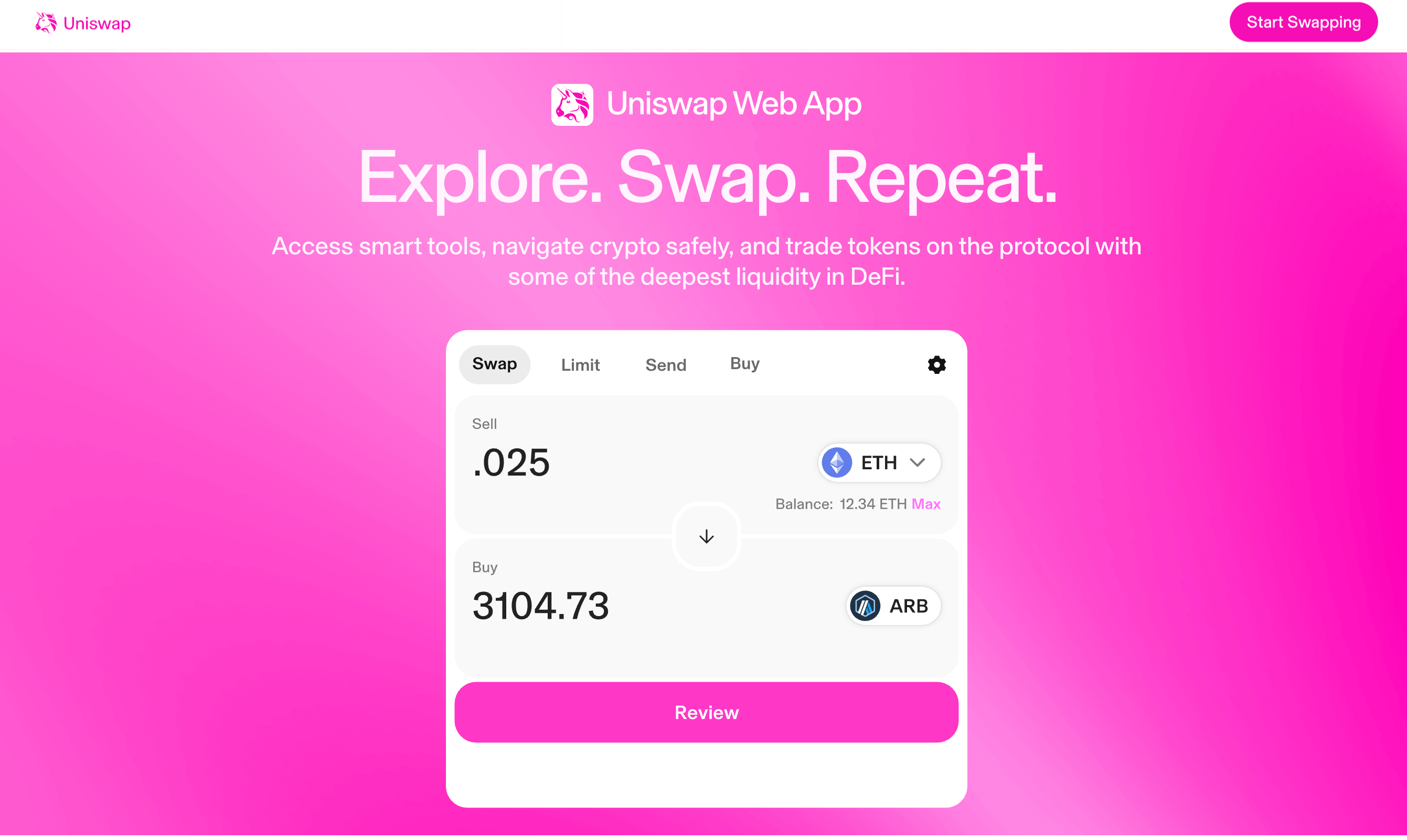
Uniswap, the leading AMM, uses V4 with hooks for customizable pools, dynamic fees, flash accounting, and native ETH. Concentrated liquidity optimizes efficiency. Audits confirm robust security (zero hacks historically). Multi-chain via Ethereum L2s and others. Fees tiered (0.01%-1%), with UNI governance and revenue sharing. 2026 updates include hook expansions, Unichain L2, and fee switch activation for deflationary tokenomics.
Head-to-Head Comparison Table
Metric | Xgram.io | Uniswap (V4) |
|---|---|---|
Supported Chains | BTC, ETH, Solana, Tron, TON, others (incl. privacy) | ETH + L2s (Arbitrum, Optimism, Base, Polygon), multi-chain deployments |
Liquidity Depth | Aggregated hybrid (proprietary + partners) | Deepest in DeFi (~$5B+ TVL across pools) |
Fees | Low, included in rates (~0.1-0.5%) | Tiered 0.01%-1%, dynamic via hooks |
Security Audits | Independent audits, AML checks | Multiple audits, battle-tested (zero hacks) |
User Adoption | 100,000+ users, strong in privacy swaps | Dominant DEX, trillions in volume |
Swap Speed | Instant (~minutes) | On-chain, fast on L2s |
Trust Factors | Non-custodial, privacy focus | Open-source, governance, UNI token |
Pros | Instant cross-chain, privacy coins, high limits | Programmable hooks, capital efficiency, vast tokens |
Cons | Less programmable, hybrid model | Gas on mainnet, complexity for advanced hooks |
Other Mentions
Platforms like PancakeSwap offer low-fee alternatives on BNB Chain, and Curve specializes in stablecoins. Focus remains on Uniswap for AMM liquidity and Xgram for instant multi-chain privacy.
2026 Outlook: Performance Tied to DeFi Growth, Adoption Trends, Potential Innovations
DeFi expansion drives both: Uniswap benefits from hook innovations and Unichain scaling; Xgram from privacy demand and cross-chain trends. Adoption rises with regulatory clarity and RWA integration.
Using Decentralized Swap Platforms: Integration, and Best Practices
How to Swap/Trade on Xgram and Uniswap
On Xgram, enter addresses and amounts for instant execution. Uniswap connects wallets, selects pools, and swaps via interface, with V4 hooks enabling advanced routing.
Benefits of Non-Custodial Platforms for Secure Swaps
Non-custodial designs minimize risks. For instant swaps across chains via USDT, check pairs like USDT/BTC on https://xgram.io/coins/usdt/btc.
Integration with Wallets, DeFi Protocols, and Yield Opportunities
Wallets like MetaMask integrate seamlessly. Uniswap enables LP yields; Xgram supports quick rebalancing for DeFi strategies.
Common Mistakes: Impermanent Loss, High Gas Fees, Unverified Pools
Monitor impermanent loss, use L2s for fees, and verify pools/audits before engaging.
Risks, Challenges, and Best Practices for Users
Key Risks: Smart Contract Exploits, Bridge Vulnerabilities, Regulatory Changes, Market Volatility
Exploits, bridge hacks, regs, and volatility pose threats.
Importance of Verification: Checking Audits, On-Chain Data, Community Governance
Review audits, on-chain metrics, and governance proposals.
Security and Wallet Practices: Hardware Wallets, Best Practices
Use hardware wallets, avoid phishing, enable protections.
Regulatory Landscape in 2026: Global Trends, Compliance in DeFi
MiCA and similar frameworks promote compliant DeFi, benefiting transparent platforms.
Frequently Asked Questions (FAQ)
What is the main difference between Xgram and Uniswap?
Xgram focuses on instant, privacy-centric cross-chain swaps with hybrid liquidity; Uniswap emphasizes programmable AMM pools and deep Ethereum liquidity.
How secure are decentralized swaps compared to centralized ones?
Decentralized offers self-custody advantages but smart contract risks; centralized has custodial vulnerabilities.
How do they perform in high-volatility markets?
Quick execution aids hedging, though slippage may occur; features like hedging mitigate.
What is the best decentralized swap platform in 2026?
Depends: Uniswap for liquidity/programmability, Xgram for instant/privacy-focused swaps.
How integrated are these platforms with major blockchains?
Uniswap deeply on Ethereum/L2s; Xgram broadly across BTC, ETH, Solana, etc.
Conclusion
Recap: Why Decentralized Swap Platforms (Especially Xgram and Uniswap) Are Strong 2026 Choices
Xgram and Uniswap provide efficient, secure non-custodial options amid DeFi's growth.

Private crypto swaps
Best rates. Secure. Wallet to wallet

 5 Min
5 Min