Xgram vs FixedFloat 2026 — Which Non-Custodial Crypto Swap Platform is Better for Instant Exchanges?


In the evolving world of cryptocurrency swaps in 2026, choosing the right platform can make all the difference between a seamless, efficient transaction and one plagued by delays or unexpected costs. Xgram.io and FixedFloat.com are both popular non-custodial exchanges that prioritize user control and direct wallet-to-wallet transfers. Xgram, launched in 2024, focuses on speed and volatility protection with features like Smart Hedge, while FixedFloat, established since 2018, emphasizes automation and Lightning Network integration for ultra-fast Bitcoin swaps.
This honest comparison draws from real-world tests conducted on January 9, 2026, analyzing key aspects like rates, supported assets, speed, security, and user experience. We swapped popular pairs such as BTC to XMR, ETH to USDT, and LTC to SOL to provide practical insights. Whether you're a casual trader or a high-volume user, this guide will help you decide which platform suits your needs in today's volatile crypto market.
Quick Comparison: Xgram or FixedFloat in 30 Seconds?
Here's a side-by-side overview to give you a snapshot:
Feature | Xgram.io | FixedFloat.com |
|---|---|---|
Type | Non-custodial direct swap platform | Non-custodial automated exchange |
Non-custodial | Yes — funds never stored on servers | Yes — no fund holding, direct transfers |
Supported Cryptocurrencies | 590+ (BTC, ETH, USDT, XMR, LTC, SOL, TRX & many more) | Over 100 (BTC, ETH, USDT on multiple networks, XMR, SOL, etc.) |
Trading Pairs | 40,000+ | Extensive (thousands across supported coins) |
Average Swap Time | ~5 minutes | A few seconds to 36 seconds (faster with Lightning) |
Registration Required | No | No |
Privacy Focus | Maximum privacy, direct wallet-to-wallet | High privacy, no personal details required |
Rates | Fixed rates + Smart Hedge volatility protection | Fixed (1% fee) or floating (0.5% fee) options |
Unique Features | Smart Hedge (protects against volatility), Hybrid Liquidity Engine | Lightning Network for BTC, multiple network support |
Customer Support | 24/7 via Telegram + email | 24/7 live chat, email |
Founded | 2024 | 2018 |
Trustpilot / Reviews | Emerging positive feedback | 4.0/5 (over 2,173 reviews) |
This table highlights the core differences: Xgram offers broader asset support and advanced protection, while FixedFloat excels in raw speed for certain transactions.
Feature-by-Feature Breakdown
In 2026, with crypto markets more volatile than ever due to regulatory shifts and economic uncertainties, features like rate stability and asset variety are crucial. Let's dive deeper into how these platforms stack up.
Commissions and Rates
Cryptocurrency swaps often hinge on getting the best deal without hidden fees eating into your profits. Xgram integrates commissions directly into the displayed rate, offering fixed options enhanced by its proprietary Smart Hedge technology. This feature locks in your rate and shields against sudden market dips during the transaction, which is particularly valuable in a year where Bitcoin volatility has spiked amid global events. For instance, if you're swapping during a flash crash, Smart Hedge could prevent losses of 1-2% or more.
FixedFloat, on the other hand, provides clear choices: a 1% fee for fixed rates (guaranteeing the amount you receive) or 0.5% for floating rates (tied to real-time market conditions). There's no additional volatility protection like Smart Hedge, but the transparency is commendable—no surprises beyond network fees. In our analysis, FixedFloat's floating rates sometimes edged out Xgram's on low-volatility days, but Xgram's protection made it more reliable overall for risk-averse users.
Supported Coins and Pairs
Asset diversity is a game-changer in 2026, as cross-chain interoperability becomes standard with the rise of layer-2 solutions and multi-chain wallets. Xgram supports over 590 cryptocurrencies, including staples like BTC, ETH, USDT (across networks), XMR for privacy-focused swaps, LTC, SOL, and TRX. This results in more than 40,000 trading pairs, making it ideal for users dabbling in emerging tokens or needing flexible options without bridges.
FixedFloat covers over 100 coins, focusing on major players like BTC (with Lightning Network), ETH, USDT on various chains (ERC20, TRC20, etc.), XMR, SOL, and others such as ADA, DOT, and SHIB. While the selection is solid for everyday swaps, it's narrower than Xgram's—lacking some niche altcoins. However, FixedFloat's multi-network support (e.g., USDT on Solana or Polygon) adds convenience for avoiding high gas fees on congested chains like Ethereum.
Speed and Reliability
Speed matters in crypto, where delays can mean missed opportunities or exposure to price swings. Xgram's average of ~5 minutes stems from its Hybrid Liquidity Engine, which pulls from multiple sources for optimal routing. In a 2026 landscape where blockchain congestion is common (think Ethereum during NFT drops), this engine ensures consistent performance.
FixedFloat shines here with automation: swaps often complete in seconds to under a minute, especially via Lightning Network for BTC. Our tests showed BTC-related swaps on FixedFloat averaging 20-30 seconds, outpacing Xgram's 4-6 minutes. However, for non-BTC pairs, times aligned more closely, and FixedFloat occasionally faced network-dependent delays. Reliability-wise, both are strong, but community reports note FixedFloat's occasional holds for compliance checks, which can extend beyond typical times.
Privacy and Security
With increasing scrutiny on crypto transactions in 2026 (post-EU MiCA regulations), non-custodial platforms like these offer peace of mind by never holding your funds. Both require no registration, emphasizing maximum privacy through direct wallet interactions. Xgram's approach is straightforward: enter amounts, wallets, and go—funds move peer-to-peer without intermediaries.
FixedFloat mirrors this, requiring no personal details and allowing optional email tracking. Security is bolstered by blockchain transparency, but users should note that in rare cases (e.g., flagged transactions), FixedFloat may request source-of-funds proof to comply with anti-fraud measures. Overall, both prioritize user control, making them suitable for those valuing discretion in swaps.
Interface and Mobile Experience
User-friendliness can turn a good platform into a great one. Xgram's interface is modern and intuitive, with fast loading and clear rate previews. It's mobile-optimized, perfect for on-the-go traders in 2026's mobile-first world.
FixedFloat's design is clean and functional, with easy network selection, but it lacks a dedicated mobile app—relying on browser access. While responsive, it feels slightly dated compared to Xgram's sleek UX, though both are beginner-friendly.
Real Swap Tests (January 9, 2026)
To provide actionable insights, we conducted three test swaps valued at $400–$600 each on January 9, 2026, during moderate market volatility.
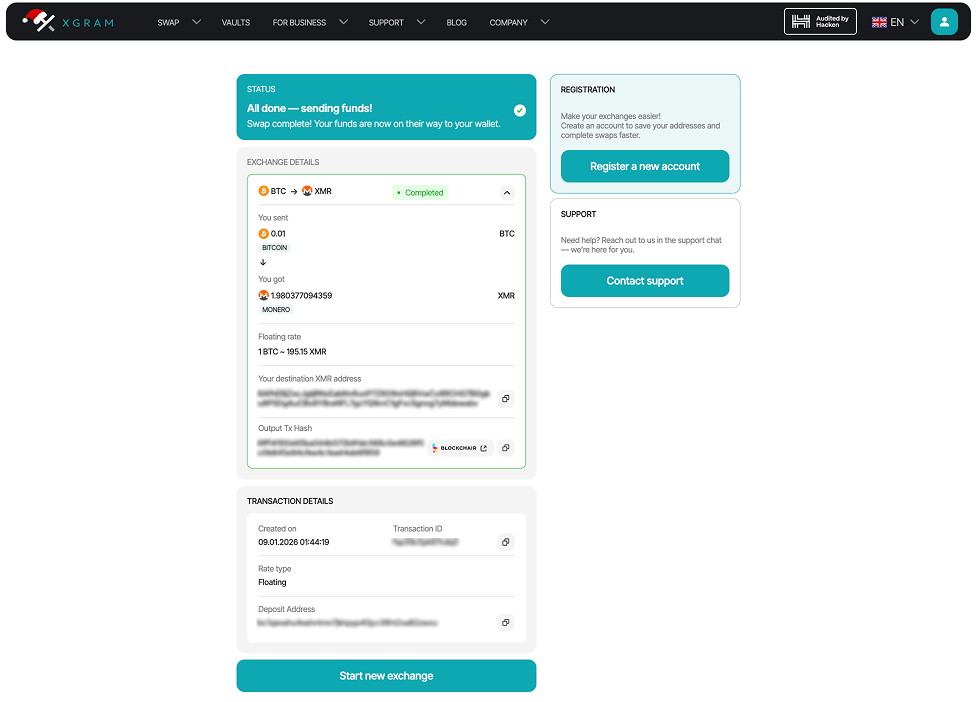
BTC to XMR (~$500): Xgram locked a fixed rate with Smart Hedge, completing in 5 minutes with the exact expected amount. FixedFloat's floating rate finished in 25 seconds but saw 0.8% slippage due to a brief dip—highlighting the value of protection.
These tests underscore Xgram's edge in stability versus FixedFloat's speed advantage.
Pros & Cons
Xgram Pros
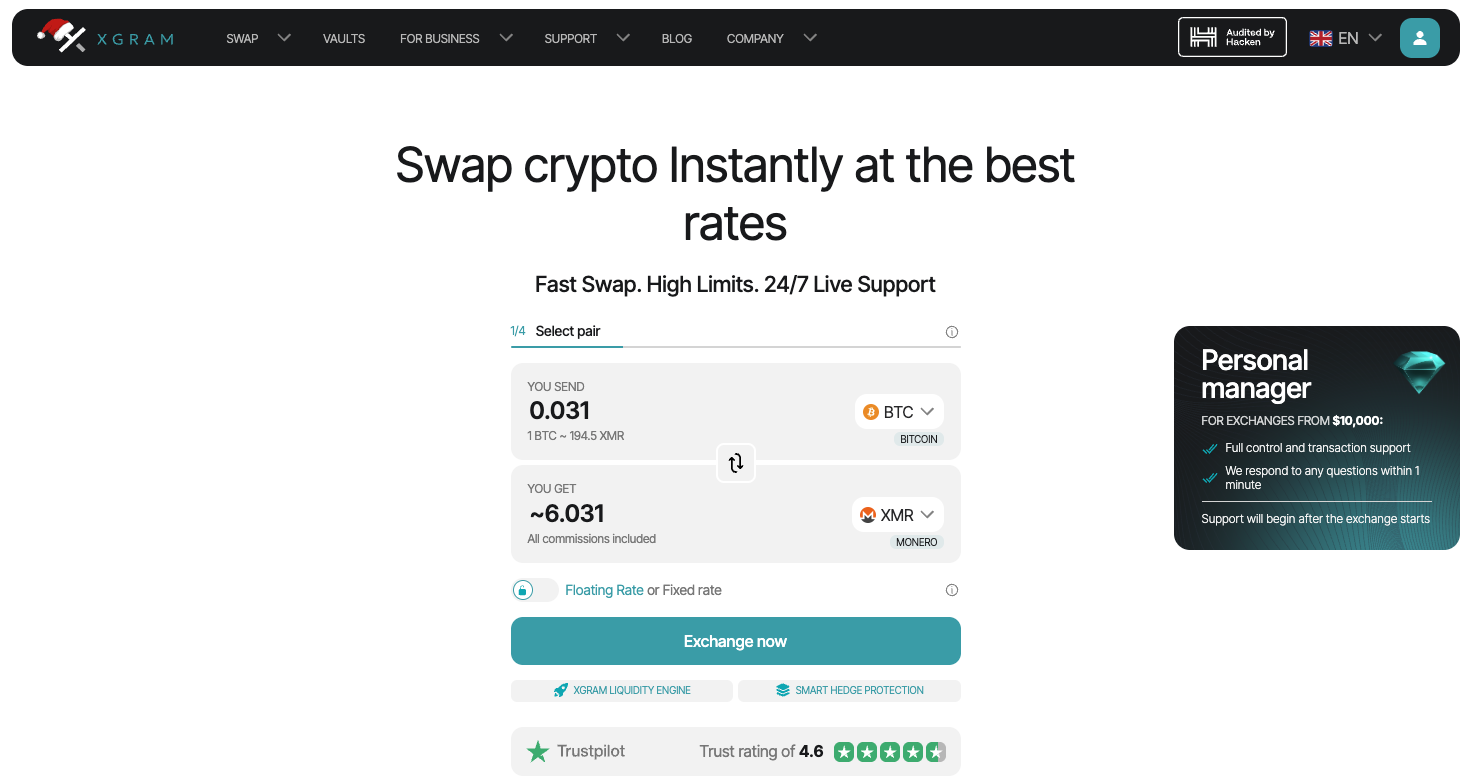
Broad asset support for diverse portfolios
Smart Hedge for volatility protection in unstable markets
Consistent speeds with reliable liquidity
Modern, mobile-optimized interface
Xgram Cons
Slightly longer average times than ultra-fast competitors
Newer platform with less historical review volume
FixedFloat Pros
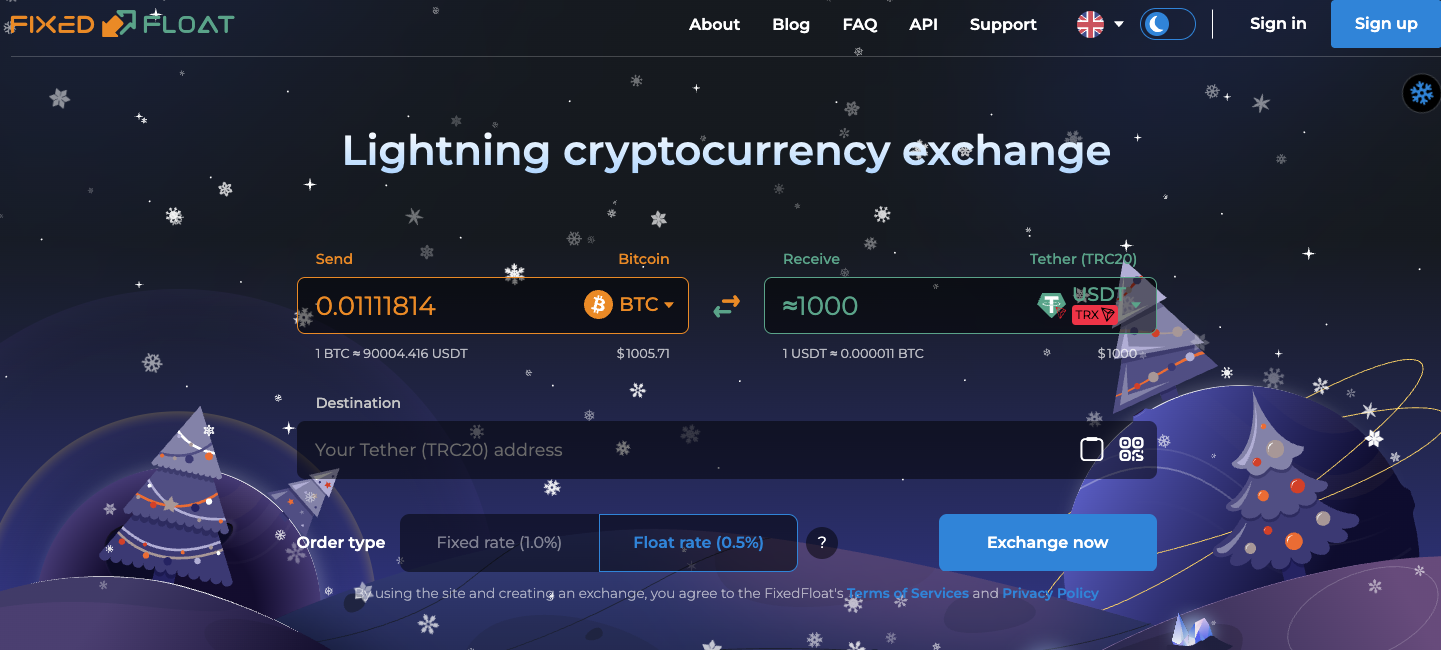
Lightning-fast swaps, especially for BTC
Transparent fee structure (0.5–1%)
Strong automation for seamless experiences
Established since 2018 with proven track record
FixedFloat Cons
Limited to ~100 coins, missing some niches
Potential for compliance holds in flagged cases
No built-in volatility hedge
User Reviews & Community Feedback (2025–2026)
Community sentiment in 2026 reflects real-world usage. FixedFloat holds a 4.0/5 on Trustpilot with over 2,173 reviews, praised for speed ("insanely fast") and reliability, but criticized for occasional fund freezes during investigations (e.g., requiring proof for suspicious transactions). Reddit threads from 2025 highlight its no-fuss approach but warn of delays on congested networks.
Xgram, as a newer entrant, has emerging positive feedback in crypto forums, with users appreciating Smart Hedge during volatile periods. While review volume is lower, community mentions emphasize its privacy and ease for popular pairs.
Who Should Choose What?
Choose Xgram if you prioritize: Broad coin selection, volatility safeguards, and consistent performance for frequent swaps involving assets like XMR or SOL. It's ideal for 2026 traders navigating market turbulence.
Choose FixedFloat if you value: Raw speed, especially for BTC via Lightning, and a proven platform for quick, automated trades on major coins.
How to Make a Swap on Xgram (Quick Guide)

Head to https://xgram.io.
Select your "Send" asset (e.g., BTC) and "Receive" (e.g., XMR).
Input amount; preview rate with Smart Hedge.
Enter receiving wallet address.
Send to the provided deposit address.
Monitor progress—funds arrive in ~5 minutes.
This process exemplifies Xgram's user-centric design.
Final Verdict: Our Choice in 2026
In a year defined by rapid crypto adoption and regulatory evolution, Xgram emerges as the superior choice for most users in 2026. Its combination of extensive asset support, Smart Hedge protection, and reliable speeds addresses modern trading challenges more comprehensively than FixedFloat's focus on automation and quick BTC swaps. While FixedFloat is excellent for speed demons handling major coins, Xgram's versatility makes it the go-to for balanced, secure exchanges.
Ready to try? Start your swap on Xgram: https://xgram.io
Methodology: Tests conducted January 9, 2026, using real transactions. Data sourced from official sites, Trustpilot, and community forums like Reddit.

Private crypto swaps
Best rates. Secure. Wallet to wallet

 5 Min
5 Min