By Hana Suzuki · Reviewed by Gabriel Moreau
Introduction
In the ever-evolving world of cryptocurrencies, one question remains paramount for both newcomers and seasoned enthusiasts: what is mining bitcoin? As of 2026, Bitcoin mining is not just a necessary component of the Bitcoin ecosystem; it is also a complex process that combines cutting-edge technology with economic incentives. This guide aims to demystify Bitcoin mining, exploring its mechanics, profitability, and future in the crypto landscape.
TL;DR
This guide explains what Bitcoin mining is, how it works, its profitability, and future trends in 2026.
Understanding Bitcoin Mining
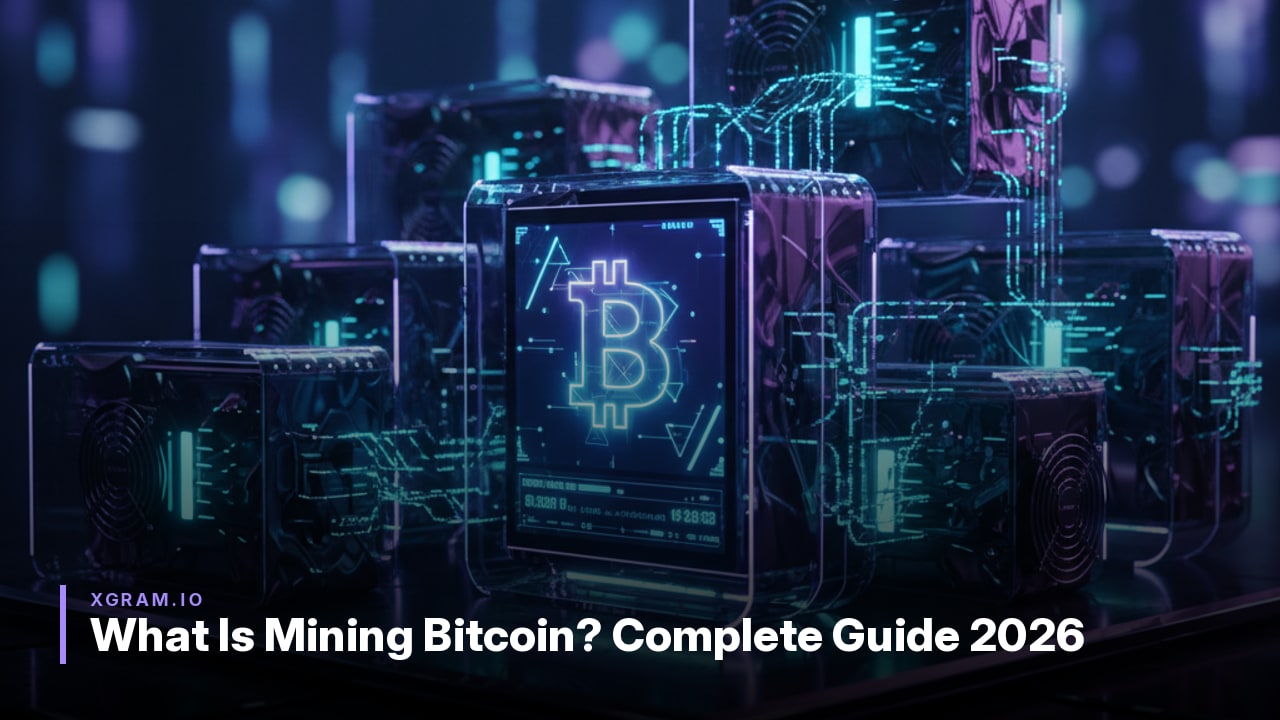
Bitcoin mining refers to the process by which new bitcoins are created and transactions are verified on the Bitcoin network. At its core, mining involves solving complex mathematical problems, which require significant computational power. Miners compete to solve these problems, and the first to succeed gets to add a new block to the blockchain—a public ledger of all Bitcoin transactions.
The Mining Process
- Transaction Collection: Miners collect transactions from the Bitcoin network and verify their validity. Each transaction is grouped together into a block.
- Hashing: Miners must find a hash—a unique digital fingerprint—of the new block that meets specific criteria set by the Bitcoin protocol. This process is known as proof-of-work.
- Block Addition: Once a miner successfully finds a valid hash, they broadcast their solution to the network. Other miners verify this solution, and upon confirmation, the new block is added to the blockchain.
- Mining Reward: The miner who adds the block receives a reward in the form of newly minted bitcoins and transaction fees from the transactions included in the block.
The Economics of Bitcoin Mining
The profitability of Bitcoin mining in 2026 hinges on several factors:
- Mining Difficulty: The Bitcoin network adjusts the difficulty of mining approximately every two weeks, ensuring that a new block is mined roughly every 10 minutes. As more miners join the network, the difficulty increases, making it harder to mine new bitcoins.
- Mining Rewards: As of July 2026, the block reward for mining a new block is 6.25 bitcoins. This reward halves approximately every four years, a process known as the “halving,” which affects profitability.
- Electricity Costs: Mining is energy-intensive. Miners must consider electricity costs, which can significantly impact profitability. Countries with cheaper electricity, like some parts of China and Russia, are attractive for mining operations.
- Equipment Costs: High-performance mining hardware (ASIC miners) is essential for competitive mining. The initial investment in equipment can be substantial, and miners must weigh these costs against potential earnings.
Mining Hardware
In 2026, the landscape of mining hardware has evolved significantly. Miners are now utilizing advanced ASIC (Application-Specific Integrated Circuit) devices designed specifically for Bitcoin mining. These machines are far more efficient than traditional GPU setups. Here’s a comparison of some popular ASIC miners:
| Model | Hash Rate (TH/s) | Power Consumption (W) | Price (USD) |
|---|---|---|---|
| Antminer S19 Pro | 110 | 3250 | 5,000 |
| Whatsminer M30S | 86 | 3360 | 4,500 |
| Bitmain Antminer S19 XP | 140 | 3010 | 6,500 |
Environmental Impact of Bitcoin Mining
As Bitcoin mining has grown, so too has scrutiny over its environmental impact. Mining consumes a significant amount of electricity, leading to concerns about carbon emissions and sustainability. In 2026, many mining operations are adopting renewable energy sources such as solar, wind, and hydroelectric power to mitigate their carbon footprint.
The Future of Bitcoin Mining
The future of Bitcoin mining, as we venture deeper into the 2020s, will be shaped by several trends:
- Increased Regulation: Governments worldwide are starting to impose regulations on mining operations, focusing on energy consumption and environmental impact. Compliance will become crucial for miners looking to operate long-term.
- Technological Advances: Innovations in mining hardware and software are expected to improve efficiency and reduce costs. Miners who stay ahead of these trends will likely have a competitive advantage.
- Decentralization: The shift towards decentralized mining pools may change the landscape of Bitcoin mining. Miners may seek to collaborate in smaller groups to share resources and reduce risks.
How to Start Mining Bitcoin
If you’re considering entering the world of Bitcoin mining, here’s a straightforward guide to get you started:
- Research: Understand the fundamentals of Bitcoin mining, including the hardware and software required.
- Choose Your Hardware: Invest in a suitable ASIC miner based on your budget and electricity costs.
- Select a Mining Pool: Joining a mining pool can increase your chances of earning rewards by combining resources with other miners.
- Set Up Your Miner: Follow the manufacturer’s instructions to install and configure your mining hardware.
- Download Mining Software: Choose software that is compatible with your miner and the mining pool, and install it on your device.
- Start Mining: Once everything is set up, monitor your mining operations and adjust settings as necessary for optimal performance.
Risks and Best Practices
- Market Volatility: The price of Bitcoin can fluctuate significantly. Miners should be prepared for price swings and have a strategy in place to manage risk.
- Hardware Failure: Mining equipment can fail due to overheating or technical issues. Regular maintenance and monitoring can help mitigate this risk.
- Regulatory Changes: Keep abreast of local regulations regarding mining operations, as changes can affect profitability and legality.
- Energy Costs: Monitor energy consumption and costs closely; consider alternative energy sources to improve profitability.
Conclusion
In summary, understanding what is mining bitcoin is essential for anyone looking to participate in the cryptocurrency space. As we progress through 2026, the mining landscape continues to evolve in complexity and relevance. By staying informed about the technological, economic, and environmental aspects of Bitcoin mining, you can position yourself effectively in this dynamic field. Whether you are a potential miner or simply curious about the process, embracing knowledge is the first step towards success in the Bitcoin ecosystem.
What are your thoughts on Bitcoin mining in 2026? Share your insights in the comments below!
This is not financial advice.

Private crypto swaps
Best rates. Secure. Wallet to wallet

 5 Min
5 Min