Is Monero Legal in 2026? XMR Rules, MiCA & EU 2027 Ban


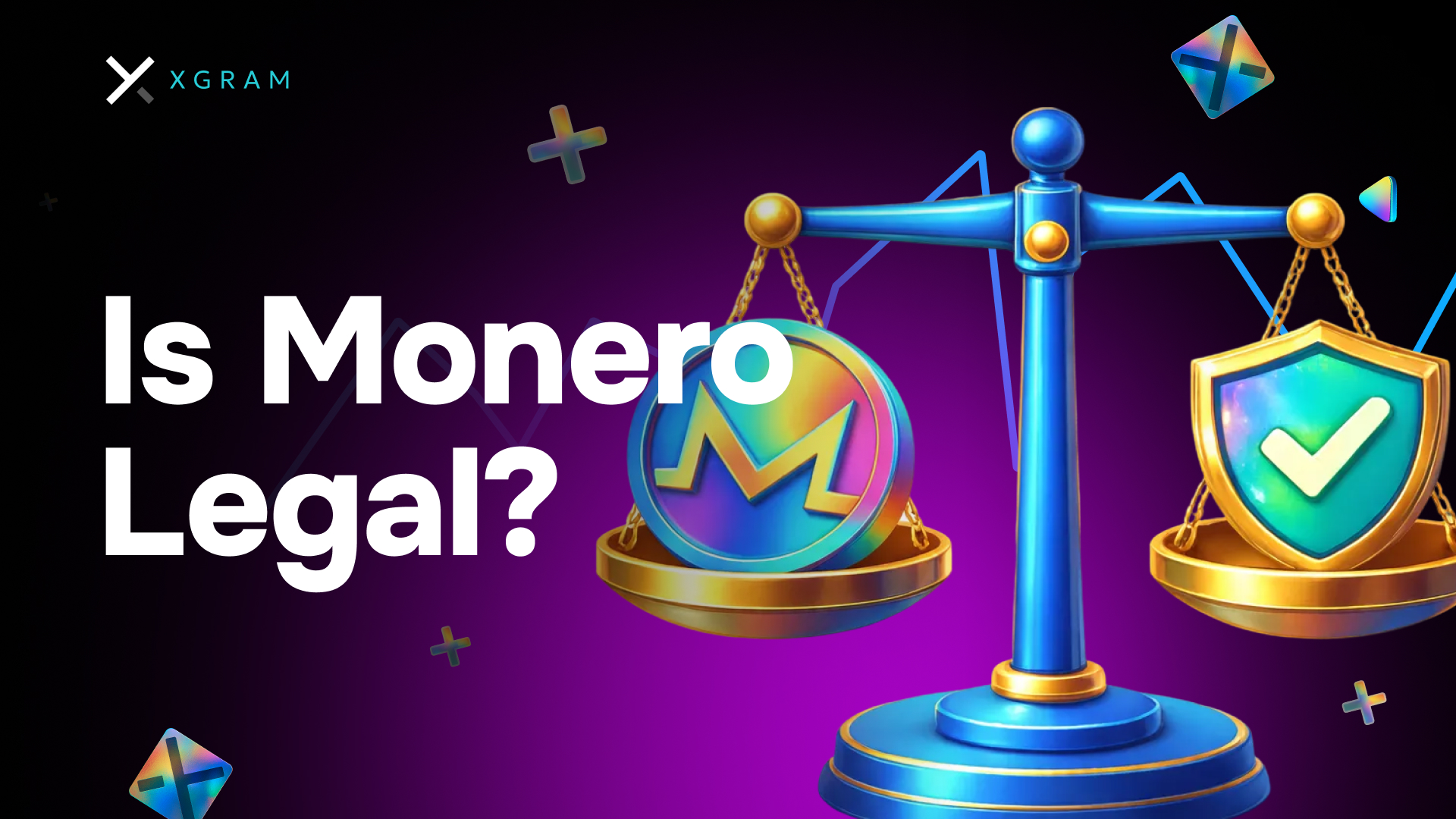
Global Overview: Is Monero Legal?
Monero itself is not banned as a technology or asset in the vast majority of countries. No major jurisdiction has enacted a complete prohibition on owning, holding, or using XMR for personal purposes. However, the legal treatment falls into several categories:
Quick 2026 answer: Monero is legal to own, hold, mine, and self-custody in most countries — no major jurisdiction bans personal possession. What has changed is access: over 70 exchanges delisted XMR through 2025 as platform-level compliance decisions (not a government ban), and from 1 July 2027 the EU’s Anti-Money Laundering Regulation will prohibit regulated EU exchanges from handling privacy coins. The restrictions target regulated platforms and intermediaries, not individual holders.
1. Fully Legal and Supported (Most Countries)
In the majority of jurisdictions — including the United States (with caveats), Canada, Australia, United Kingdom, Switzerland, Singapore, Japan, South Korea, and many others — Monero is legal to own, trade, mine, and use. It is treated as a cryptocurrency or digital asset under existing financial or tax laws. Users must report capital gains (where applicable), and businesses accepting XMR may need to comply with local AML/KYC rules if they qualify as VASPs (Virtual Asset Service Providers).
2. Restricted or Heavily Regulated
Some countries impose partial restrictions:
- European Union (MiCA) — see detailed section below
- Japan — privacy coins like XMR are not banned but face stricter AML scrutiny; many local exchanges delisted XMR in 2024–2025
- South Korea — privacy coins restricted on local exchanges since 2021; trading still possible via international platforms
- India — crypto taxation (30% flat + 1% TDS) applies, but no specific ban on privacy coins; RBI remains skeptical
3. Effectively Banned or Severely Restricted
A small number of jurisdictions have taken strong action:
- United Arab Emirates (Dubai VARA & DIFC) — privacy coins banned from regulated VASPs; Dubai’s DIFC framework formalized the prohibition in January 2026. Personal use is not explicitly illegal but heavily discouraged
- China — all crypto banned since 2021, including Monero
- Qatar, Algeria, Egypt, Morocco — crypto (including XMR) prohibited or severely restricted
EU MiCA Regulation and Monero in 2026
The Markets in Crypto-Assets (MiCA) regulation, fully effective across the EU since December 2024, significantly impacts privacy coins like Monero.
Looking ahead, the EU’s Anti-Money Laundering Regulation (AMLR, Regulation (EU) 2024/1624) goes beyond MiCA’s “mitigate risks” wording: from 1 July 2027 it explicitly prohibits credit institutions, financial institutions, and CASPs from keeping anonymity-enhancing accounts or handling privacy coins like Monero. This effectively forces EU-licensed exchanges to fully delist XMR for European users by mid-2027, turning today’s patchwork of voluntary delistings into a hard legal requirement.
Key MiCA Provisions Affecting XMR
- Asset-Referenced Tokens (ARTs) and E-Money Tokens (EMTs) — Monero does not qualify as either (not pegged to fiat or commodity in a regulated way), so it falls under the “other crypto-assets” category
- CASP Obligations — Crypto-Asset Service Providers (exchanges, wallets, custody providers) operating in the EU must perform KYC/AML checks on all users
- Privacy Coin Restrictions — MiCA does not explicitly ban privacy coins, but requires CASPs to “mitigate risks” associated with anonymity-enhanced coins. In practice, most EU-licensed exchanges delisted or restricted XMR trading/withdrawals by early 2026
- Travel Rule — EU applies FATF Travel Rule: VASPs must collect and share originator/beneficiary info for transfers ≥ €1000. Monero's privacy makes compliance impossible → many EU platforms block XMR deposits/withdrawals
Practical Impact in EU (2026)
- Most regulated EU exchanges (Bitstamp, Kraken EU, Coinbase EU) no longer support XMR deposits/withdrawals
- Users can still trade XMR on non-EU platforms or DEXes/P2P, but EU residents risk violating MiCA if using EU-regulated services
- Personal holding and self-custody of XMR remain legal — no ban on ownership
- Businesses (merchants, services) accepting XMR may face AML scrutiny if classified as VASPs
United States Position on Monero in 2026
The US has no federal ban on Monero ownership or use. However:
- SEC/CFTC — no formal classification of XMR as security or commodity yet; privacy coins remain in gray area
- FinCEN — treats XMR as convertible virtual currency; VASPs must apply BSA/AML rules
- IRS — XMR treated as property; capital gains tax applies on disposals/redemptions, and from the 2025 tax year brokers report digital-asset sales on Form 1099-DA
- Major Exchanges — Kraken, Binance.US, Coinbase delisted XMR years ago; only smaller/no-KYC platforms (TradeOgre, NonKYC.io) and DEXes support it
- IRS Summons — in 2025–2026 IRS issued summons to Chainalysis/Kraken for XMR data — shows continued monitoring
Bottom line: holding and using XMR is legal for individuals in the US, but trading on regulated platforms is heavily restricted, pushing users to non-KYC/DEX/P2P methods.
Other Major Jurisdictions in 2026
- United Kingdom — FCA treats XMR as high-risk; most regulated exchanges delisted it. Personal use legal
- Switzerland — FINMA views privacy coins neutrally; XMR tradable on regulated platforms (SIX, Bitcoin Suisse)
- Singapore — MAS requires VASPs to mitigate anonymity risks; XMR restricted on local exchanges but personal use allowed
- Japan — JFSA classifies privacy coins as high-risk; most local exchanges delisted XMR
- Australia — AUSTRAC requires KYC for VASPs; XMR available on some platforms but with restrictions
How Monero Users Navigate Regulations in 2026
Despite restrictions, Monero remains usable worldwide through:
- Non-KYC centralized exchanges (MEXC, TradeOgre, NonKYC.io — withdrawal limits apply)
- Non-custodial swap aggregators (Xgram.io)
- Decentralized P2P platforms (Haveno, AgoraDesk)
- Atomic swaps (Farcaster, COMIT, Liquality)
- Self-custody wallets (Feather, Cake, official GUI, Ledger)
Users often combine methods: buy BTC/USDT on regulated exchange → swap to XMR via non-custodial aggregator → store in private wallet. This minimizes exposure to KYC while preserving privacy.
Risks and Considerations
While Monero itself is not illegal in most places, users should be aware of:
- Regulatory risk — future bans or restrictions possible in some jurisdictions
- Exchange delistings — reduces on-ramp/off-ramp options
- Tax reporting — capital gains on XMR trades/redemptions taxable in most countries
- Association with illicit use — regulators often cite darknet/marketplace use (though majority of XMR transactions are legitimate)
Conclusion
Monero is legal to own, hold, and use in the vast majority of countries in 2026, including the US, UK, Switzerland, and most of Asia. However, its privacy features lead to restrictions on regulated exchanges and heightened scrutiny under frameworks like MiCA. In the EU, MiCA does not ban Monero outright but effectively excludes it from regulated CASP services due to AML compliance challenges. Users navigate this landscape through no-KYC platforms, DEXes, P2P markets, and self-custody — preserving Monero's core value proposition: financial privacy.
The regulatory picture continues to evolve — always check local laws and platform policies before transacting.

Private crypto swaps
Best rates. Secure. Wallet to wallet

 5 Min
5 Min