How to Sell Litecoin (LTC)
Tl;dr quick takeaways
Selling Litecoin can be simple if you pick the right type of platform. Centralized exchanges often offer robust liquidity but require account verification. P2P platforms give you more privacy, though you want to use escrow for safety. Instant swap services let you trade LTC quickly without an account, often at higher fees. Once you decide on your path, follow best practices to protect your funds and personal details.
Understand Litecoin fundamentals
Before jumping into the selling process, it helps to understand what Litecoin is and why people buy and sell it.
Litecoin launched in 2011 as a “lite” version of Bitcoin. Like Bitcoin, it is decentralized and not controlled by any single authority. However, many investors see Litecoin as a faster network for everyday transactions, with lower average fees than its older counterpart.
You might have acquired LTC as a long-term investment or through regular trading. Some people also receive Litecoin as payment for goods or services. Over the years, LTC has been listed on most crypto exchanges, making it easier to convert into fiat or other cryptocurrencies compared to lesser-known altcoins.
When you plan to sell, it is smart to consider market conditions. Litecoin’s price, like all cryptocurrencies, is influenced by supply, demand, and broader economic trends. If you wait for a moment when LTC is in high demand, you may get a better price. That said, timing the market can be challenging, so make sure you set realistic expectations.
Key concepts that will come in handy:
- Volatility: Crypto prices can rise or fall quickly.
- Liquidity: This is how easily you can sell LTC without significantly moving the market price. Most major exchanges offer enough liquidity for LTC.
- Wallet management: Whether you use a private wallet or custodial account, you need to keep track of inbound and outbound transactions.
By knowing these Litecoin fundamentals, you will better understand the ecosystem and feel confident when deciding how and when to sell.
Compare your selling options
When you want to sell Litecoin, you have several pathways. Each route has its pros and cons, so pick one that fits your comfort zone, your timelines, and your fees budget.
Centralized exchanges
These are the big names like Coinbase, Binance, and others. They store your LTC in a custodial wallet. Once verified, you can use a variety of trading tools, such as limit or market orders. Centralized exchanges generally have high liquidity, meaning it is easy to sell without too much impact on the price. The downside is that you usually must go through identity verification (KYC), and there are withdrawal fees when you move fiat out to your bank account.Decentralized or instant swap services
Decentralized exchanges (DEX) let you trade crypto without a central authority controlling your funds. Some DEX platforms only support certain coins, so check if Litecoin is listed. Alternatively, instant swap services do not require full accounts and can be a quick choice if you need a fast trade. These services can have higher fees or less favorable exchange rates, so stay on the lookout for any extra cost.P2P (peer-to-peer) platforms
A P2P marketplace connects sellers and buyers directly. You set your preferred payment method (e.g., bank transfer, PayPal, cash) and negotiate the price. An escrow system typically holds the LTC until you confirm the payment has arrived. P2P can be more private than centralized exchanges, but you need to do your due diligence and remain alert for potential scams.
When considering fees, read a platform’s schedule carefully. Some will charge a flat fee for trades, others take a percentage of the trade amount. It is wise to compare costs as well as payout times. If your priority is speed, a direct swap or a well-known centralized exchange might work best. If you want to hold your privacy, a P2P platform is appealing, but you must be extra careful about the reliability of the buyer or seller.
Follow a standard exchange process
If you prefer an exchange setting, you will have a more structured system with plenty of support and tools. Here is a typical workflow to sell LTC on a centralized exchange.
Create and verify your account
Start by signing up with an exchange that supports LTC-to-fiat or LTC-to-crypto pairs. The majority of popular platforms handle Litecoin, so you have a wide choice. After registration, you will be prompted to submit identity documents. This Know Your Customer (KYC) process could involve uploading a copy of your passport or driver’s license and other personal details. Approval usually arrives within a day or two, though some exchanges can be faster.
Deposit Litecoin
Before selling, you need to move LTC from your external wallet into the exchange’s deposit address. In your exchange dashboard, locate your Litecoin deposit address. Open your personal wallet and send LTC to that address. Depending on the number of network confirmations required, it might take a few minutes or longer for your funds to show up. Watch out for deposit fees—some exchanges do not charge for LTC deposits, while others might have a minimal fee.
Place your sell order
Once your Litecoin is visible in your exchange wallet, you can place a sell order. You typically have two main types of orders:
- Market order: Sells your LTC immediately at the current market price. This is faster but means you have less control over the final price.
- Limit order: Lets you set a specific price. Your LTC sells only if the market hits that threshold. This can be useful if you want a certain price, but it may take a while to fill.
For many sellers, a market order is the quickest route. Keep an eye on the order book to check the current price of LTC vs. your desired currency (USD, EUR, or BTC, for example).
Withdraw your funds
After your sell order executes successfully, your balance will be in the fiat or crypto you traded for. If you are converting LTC into fiat, look for the “withdraw” or “cash out” button. Enter your bank account details and confirm the transaction. Withdrawals can take anywhere from a few hours to a few days to land in your bank, depending on the exchange and your bank’s processing time. Each transaction may come with a fee, so confirm the cost before you finalize.
At this stage, be sure to enable all possible security measures on the exchange (two-factor authentication, verified withdrawal addresses, etc.). This keeps your account protected from unauthorized activity.
Explore P2P selling
If you want a more direct connection to buyers, or if you need a payment method not commonly supported by exchanges, a peer-to-peer platform can be a smart option. While it can feel more personal, you still want to prioritize safety.
Choosing a P2P platform
Look for platforms that have robust escrow services and a dependable reputation. The escrow holds your Litecoin until the buyer completes their payment. Once you confirm that you have received the funds, the LTC is released to the buyer. This process safeguards both parties from fraud. Be sure to read user reviews and check for any red flags about withheld funds or suspicious accounts.
Setting up your offer
Most P2P marketplaces let you create a listing, specifying:
- How much LTC you want to sell
- The currency you want to receive (USD, EUR, etc.)
- The payment methods you accept
- Your exchange rate, which might be slightly above or below the market rate
Your listing will appear to potential buyers browsing offers. Some sellers set a narrower price in exchange for quick sales. Others want to maximize revenue by setting a higher rate, understanding it might take a little longer to find a buyer.
Making the trade
When a buyer selects your offer, the platform typically moves your LTC into escrow. Communicate with the buyer through the site’s messaging system, confirm how they will pay, and request that they notify you once money has been sent. Double-check that the correct amount has cleared in your bank or e-wallet. Once funds are confirmed, release the Litecoin from escrow to the buyer.
Staying safe
- Follow the platform’s guidelines for dispute resolution.
- Keep your conversations on the platform, so you have a record if a conflict arises.
- Some P2P sites reward highly rated sellers with faster listings or lower fees, making trustworthiness a benefit for your future trades.
By taking time to confirm each step, you can successfully sell Litecoin without friction, often with the advantage of flexible payment methods and a higher level of anonymity.
Try swaps with Xgram
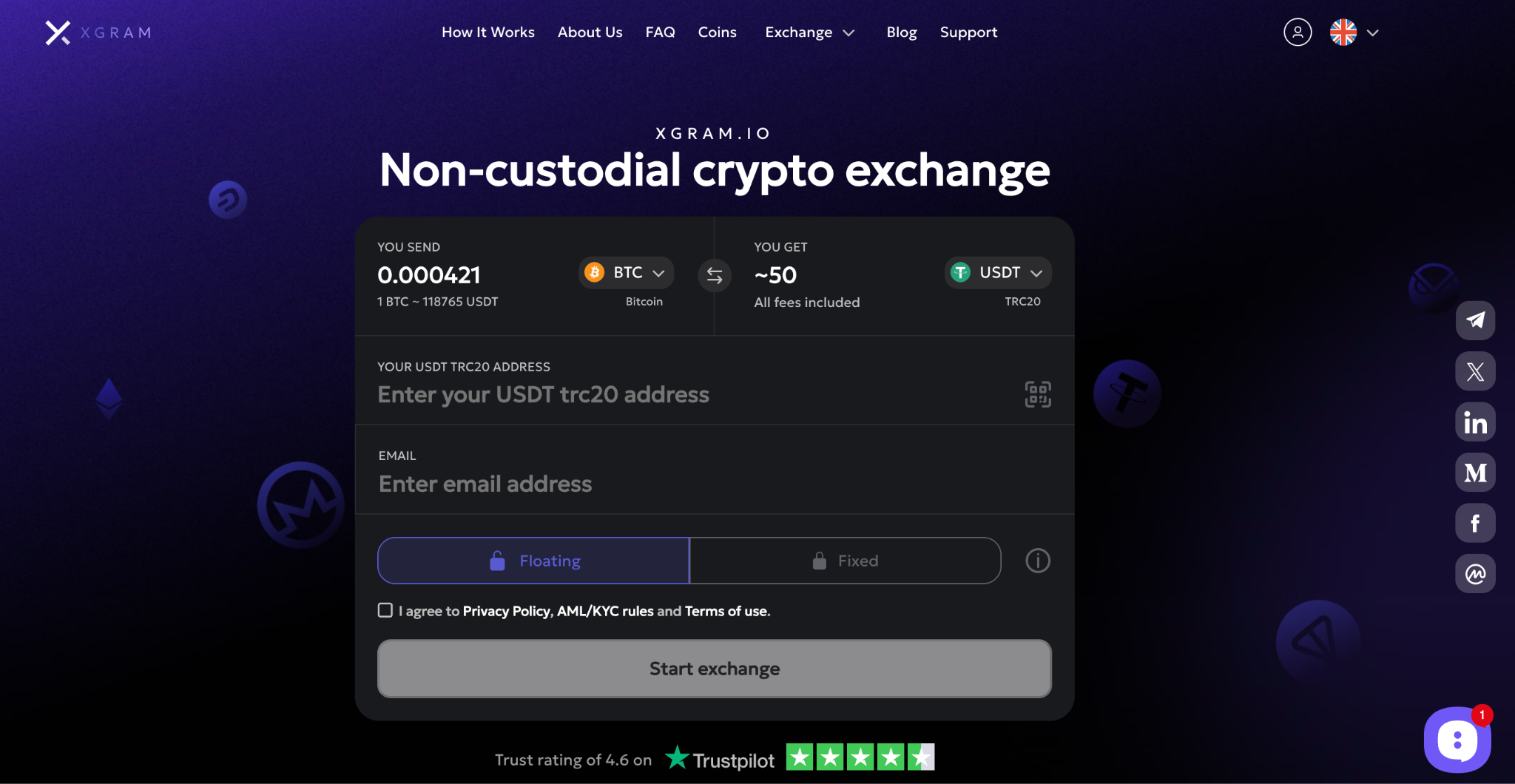
In addition to standard methods, you might want a swap that saves you time and reduces fees. Xgram is one platform that lets you perform not only typical coin exchanges, but also cross-chain conversions without needing to connect a wallet. That means you can swap LTC to another chain or coin while avoiding complicated bridging procedures.
- Xgram requires no external wallet integration, simplifying your process.
- You can generally enjoy lower fees, especially during cross-chain operations where bridging can otherwise become expensive.
- Everything happens within a user-friendly interface. Xgram streamlines the steps so you can quickly calculate your final output.
- Many people praise Xgram for its intuitive design. Even if you are new to swapping crypto, you will find it straightforward.
- The platform eliminates extra layers that can slow down trades. Because you do not have to connect multiple wallets, setup is fast.
So if you have LTC and want to convert it seamlessly—whether that is to another coin or into an asset on a different chain—Xgram could be the option that strikes a balance between speed and minimal fees. Keep in mind that transaction costs and processing times can still vary, depending on network congestion. However, by cutting out wallet-connection steps and bridging complexities, Xgram aims to make cross-chain exchanges feel more like instant swaps than a multi-step process.
Prevent common mistakes
To protect your funds—and your peace of mind—be careful about these potential pitfalls:
Inputting the wrong wallet address
Always double-check wallet addresses when depositing or withdrawing. Crypto addresses are long strings of characters, and one typo could cost you your LTC forever.Falling for phishing or fake exchanges
Scammers often create websites that look like popular exchanges or unsuspecting email alerts. Verify URLs and avoid clicking on random links in emails. Bookmark official exchange sites and only use trusted channels.Overlooking fees
Selling Litecoin comes with supply-and-demand-based asset prices. Then you have trading fees, withdrawal fees, and possibly deposit fees. On a P2P platform, you might pay an escrow fee, or the site might take a cut. Make sure to factor all these costs into your final calculation.Ignoring local regulations
Crypto regulations vary widely across different places. Some platforms might not be accessible in your country. Check the rules so you do not violate local laws or run into sudden account freezes.Rushing through the transaction
P2P trades, especially, require your focus. Communicate with your buyer or seller, confirm details, and make sure you release LTC from escrow only after receiving a valid payment. A little caution can save you a lot of trouble.Neglecting security best practices
Whether you prefer a hardware wallet or trust an exchange, keep your credentials in a safe place. Use strong passwords, enable two-factor authentication, and consider password manager tools.Missing out on market research
You do not have to be a day trader, but you should know the current LTC price and be aware of major trends. That way, you can avoid unfavorable deals or panic selling when the market dips temporarily.
By anticipating these pitfalls and taking a few straightforward steps, you significantly improve your selling experience and stay in control of your Litecoin assets.
FAQs
Can I sell Litecoin directly for cash?
Yes. Some crypto exchanges let you withdraw funds straight to your bank account after trading LTC for USD or other fiat currencies. P2P platforms also allow cash trades if someone locally wants to buy your LTC. However, you should always meet in a safe public location for in-person transactions, and use the platform’s escrow to ensure fairness on both sides.What is the minimum amount of LTC I can sell?
That depends on the platform. Many exchanges have a minimum trade volume, but it is usually very small, so you can sell even fractional amounts of Litecoin. P2P sites may also let you sell partial LTC, though you must check the individual offer listings to see if buyers have set specific requirements.Can I sell LTC if it is stored in a hardware wallet?
Absolutely. You just need to send the LTC from your hardware wallet to the exchange or buyer’s escrow address. Hardware wallets do not prevent you from making transfers. You will pay a small network fee to move LTC from your hardware wallet, and then you can complete your sale like normal.How can I reduce fees when selling LTC?
First, compare fees across multiple platforms. Some sites charge lower trading fees but higher withdrawal fees. Others have lower withdrawal fees but higher maker/taker fees. If you do not want to create an account or verify your ID, you can use instant swap services, though you may pay a slightly higher exchange rate. Another tip is to aim for off-peak network times to avoid surge pricing on LTC transaction fees.Can I sell LTC for other cryptocurrencies like BTC or ETH?
Definitely. Most major exchanges have trading pairs such as LTC/BTC or LTC/ETH, letting you convert your Litecoin into another crypto. You can also use cross-chain swap services like Xgram, which give you the option to exchange LTC for almost any other cryptocurrency. This might be a faster route if your overall plan is to hold a different digital asset instead of withdrawing to fiat.
Your next steps
Now that you have a solid grasp of how to sell Litecoin, decide which selling method fits your goals and comfort level. Centralized exchanges provide a familiar structure but demand ID verification. P2P platforms allow more flexibility, especially in payment methods and personal privacy. Instant swap services cut the time but may charge higher fees.
If you do not want to juggle wallets or bridging, platforms like Xgram let you convert LTC effortlessly across chains or into other cryptos, often at lower overall network costs. Whichever path you choose, remember to confirm wallet addresses, compare fees, and stay aware of possible scams. With a measured approach and careful planning, you can successfully trade out of Litecoin with minimal fuss. You have the knowledge now. It is time to take the next step with confidence, lock in your sale, and manage your funds the way you see fit.

Private crypto swaps
Best rates. Secure. Wallet to wallet

 5 Min
5 Min