Your Ultimate Guide to How to Make Money With Bitcoin



TL;DR (In 3–4 sentences)
Bitcoin offers multiple avenues for making money, such as buying and holding (HODLing), active trading, participating in mining, or exploring yield-earning options. You should start by grasping core Bitcoin principles and setting up a secure wallet. Carefully research and test each method to find what suits your goals. Always keep an eye on risk management and only invest what you can afford to lose.
Understand bitcoin fundamentals
Getting a grasp on the basics is the first step in learning how to make money with Bitcoin. You want to know why Bitcoin matters, how it works, and how people trade or use it. Once you understand these concepts, you will feel more confident when you move forward with any specific money-making strategy.
Basic definitions
- Bitcoin (BTC). A digital currency that operates on a decentralized network called the blockchain. It allows you to store, send, and receive value without needing an intermediary, like a bank or payment processor.
- Blockchain. A publicly available digital ledger that records Bitcoin transactions in chronological order. Each block of transactions is cryptographically linked to the next, making fraudulent changes extremely difficult.
- Mining. The process by which new Bitcoins are generated and transactions are validated. Specialized computers solve complex mathematical problems to secure the network and earn new Bitcoins as a reward.
- HODL. A playful misspelling of “hold,” widely used in the crypto community to refer to buying and holding Bitcoin long-term, ignoring short-term price swings.
Why bitcoin holds value
At first glance, Bitcoin can seem purely digital and intangible, so it is reasonable to wonder why it has any value. Its worth generally comes from:
- Limited supply. Only 21 million Bitcoins can ever exist, which introduces an element of scarcity.
- Decentralization. No single authority controls Bitcoin. This independence from central banks or governments appeals to those seeking alternative forms of money.
- Global usability. People across the world can send or receive Bitcoin, often faster and at lower costs than traditional bank transfers, depending on network congestion and fees.
- Growing acceptance. As more merchants and financial platforms adopt Bitcoin, it gains broader utility and credibility.
Understanding these fundamentals sets you up to make informed decisions about how to approach various income strategies.
Start with HODLing
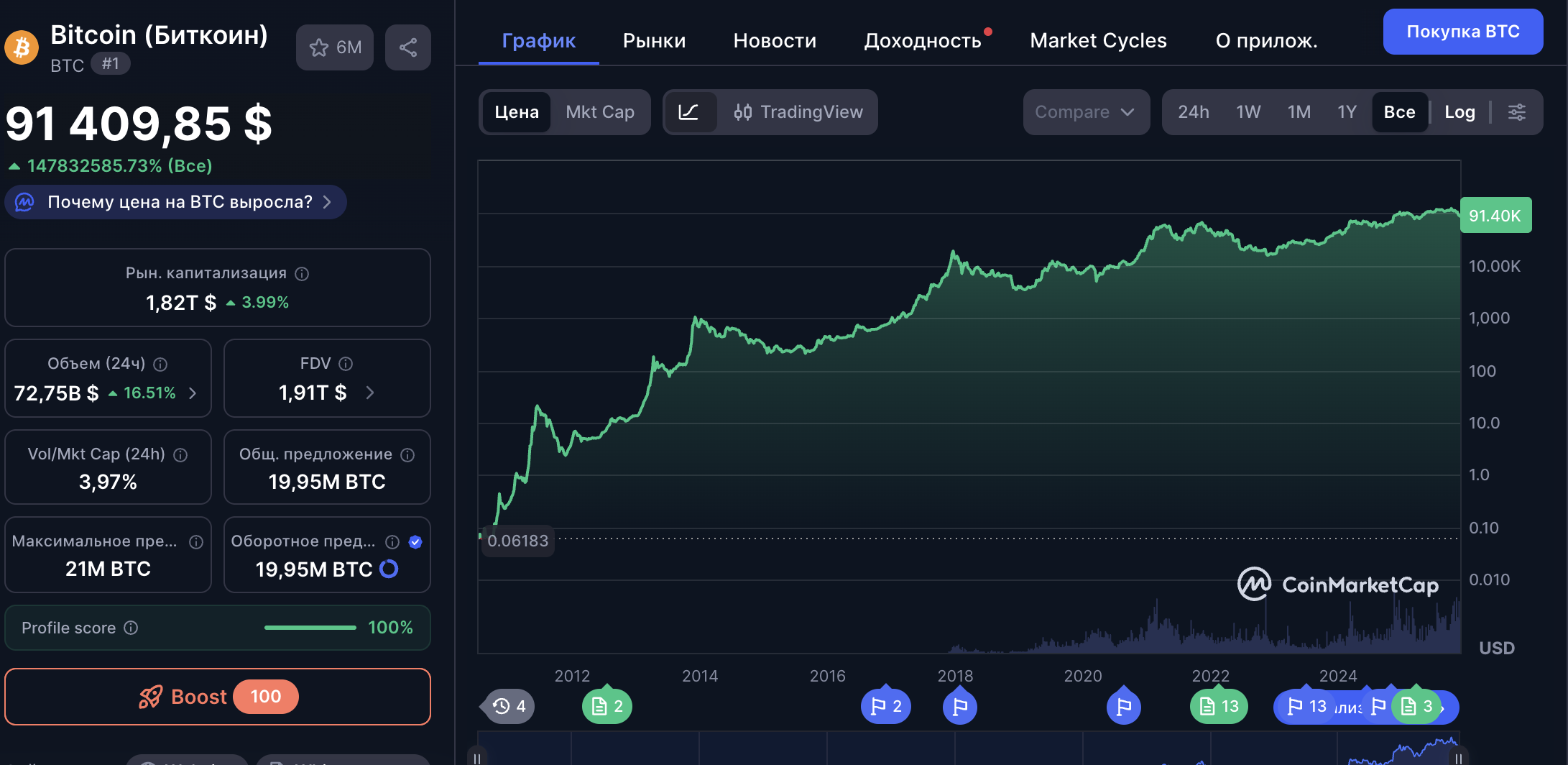
One of the simplest ways to learn how to make money with Bitcoin is to buy it and hold on for the long term, commonly known as HODLing. This strategy assumes that Bitcoin’s value may increase over the years due to limited supply and increased adoption. It also suits beginners who may not have the time or confidence for active trading.
Selecting a wallet
Before you purchase your first Bitcoin, set up a secure wallet. Wallets come in different shapes and sizes:
- Online (hot) wallets. These are connected to the internet and allow quick access to your Bitcoin. They can be web-based or exist as mobile or desktop apps. Convenience is a plus, but online connectivity makes them more vulnerable to hacking.
- Hardware wallets. These are physical devices that store your private keys offline. They offer stronger security than most online options. Examples include specialized USB-like devices that you connect only when you want to send or receive funds.
- Paper wallets. These involve printing your private keys and storing them in a safe place. While immune to online hacks, you must protect them from physical damage or loss.
Secure storage tips
Because your Bitcoin holdings can be significant, you should prioritize security:
- Enable two-factor authentication (2FA). Whether you use an exchange or online wallet, add a second layer of security to keep intruders out.
- Use strong passwords. Aim for complex combinations of letters, numbers, and symbols.
- Back up your wallet. Store backup recovery phrases in safe places offline.
- Limit hot wallet exposure. Only keep the amounts you frequently trade in a hot wallet. Secure most of your holdings in a reliable hardware or paper wallet.
With your wallet sorted out, you can buy Bitcoin from an exchange and hold it in the expectation of price appreciation. Keep in mind that price swings can be dramatic, so patience and a long-term perspective are key here.
Take advantage of trading
HODLing is not the only way to make money with Bitcoin. You can also try different trading strategies if you have time to study price trends and market behavior. Trading can potentially yield higher returns over shorter periods, although it also brings higher risks.
Spot trading
Spot trading involves buying or selling Bitcoin at the current market price with immediate settlement. You can practice spot trading on most crypto exchanges. Here are a few points to keep in mind:
- Use limit orders. Instead of always buying or selling at market price, consider limit orders that let you set specific entry or exit points.
- Pay attention to fees. Exchanges typically charge fees per transaction. Frequent trading can eat into your profits if fees are high.
- Manage your capital. Decide how much of your overall investment you are willing to risk in trading. Preserve a portion of your funds in safer allocations if you are uncertain about market swings.
Margin and futures
Margin and futures trading are advanced methods for those who want to multiply potential gains (and, note, also potential losses):
- Margin trading. You borrow funds from an exchange to increase the size of your trading position. This can magnify your gains but also your losses.
- Futures contracts. You agree to buy or sell Bitcoin at a predetermined price on a specified future date. Correct market predictions can lead to profitable outcomes, while incorrect guesses may amplify your losses if you do not manage your positions.
These strategies require a deep understanding of market dynamics. They can be extremely profitable but also incur heavy risk if markets move against you.
Consider bitcoin mining
Bitcoin mining was once considered the primary way to earn free Bitcoin. However, as more miners have joined the network, mining became much more competitive and energy-intensive. Still, it can be a profitable avenue if you have the right equipment and affordable electricity.
Hardware requirements
To become a miner, you need specialized computers called Application-Specific Integrated Circuits (ASICs). These devices are designed specifically for mining Bitcoin. Before you invest in mining hardware, consider:
- Electricity costs. Bitcoin mining consumes significant power. High electricity bills can quickly offset any mining rewards if energy is too pricey in your area.
- Initial investment. ASIC miners can be expensive. The latest models also become less profitable over time as mining difficulty increases.
- Cooling and space. ASIC miners generate heat and noise. You must plan for adequate cooling and room to operate the machines comfortably.
Cloud mining
If running your own hardware is not feasible, you might explore cloud mining. You pay a service provider to run mining hardware on your behalf. In exchange, you earn a proportional share of the mining rewards. However, be cautious:
- Some cloud mining platforms have come under scrutiny for being unsustainable or fraudulent.
- Upfront fees can eat into your profits if Bitcoin’s price stagnates or declines.
- Even legitimate platforms can drastically reduce your returns if you face high maintenance or electricity fees.
Mining can still be profitable in certain circumstances, but do your due diligence before committing resources to hardware or a third-party mining provider.
Earn with yield options
Another potential answer to how to make money with Bitcoin is generating yield. While Bitcoin itself does not natively support staking like some proof-of-stake coins, there are ways to earn interest or returns by lending or locking your BTC for specified periods.
Bitcoin staking alternatives
Strictly speaking, Bitcoin does not have a staking system like cryptocurrencies that use proof-of-stake consensus. However, you can still “stake” or lock wrapped versions of Bitcoin (for example, wBTC on the Ethereum network) in decentralized finance (DeFi) protocols. Essentially, you:
- Convert your Bitcoin to a wrapped token on a chain that supports staking.
- Deposit it into a DeFi platform that offers rewards for locking tokens.
- Earn returns in the form of interest or governance tokens.
Be aware that bridging assets between chains can involve complex steps, and any DeFi protocol can carry risks such as smart contract vulnerabilities.
Lending services
Crypto lending platforms allow you to earn interest by lending your Bitcoin to margin traders or other borrowers. You deposit your BTC onto the platform, and in return for locking it there, you receive periodic interest payments. These platforms can be:
- Centralized. Managed by a company that sets rates, enforces lending terms, and handles loan repayments.
- Decentralized. Managed by smart contracts. They typically employ algorithmic lending rates based on supply and demand.
While lending income might be lower than what you’d get from a high-risk trade, it can be a more stable option. Always vet the platform’s security record and loan terms.
Explore cross-chain swaps with xgram
When you want to move assets between different blockchains or conduct regular trades with minimal fees, consider using xgram as a versatile service.
- xgram can handle both cross-chain transactions and standard trades, giving you flexibility if you hold assets on multiple networks.
- You do not need to connect a wallet, making the process smooth and fast if you want to avoid additional setup steps.
- xgram is designed to let you swap seamlessly across various blockchains, so you can save time when transferring value from one asset to another.
- It also offers competitive fee structures compared to many traditional exchanges, which can increase your net earnings.
- If you plan to perform multiple trades or work with small margins, xgram’s reduced fees and simplified process can be particularly beneficial.
Keep security in mind
All your efforts to make money with Bitcoin can go to waste if you fail to manage risk and security properly. Fraudulent schemes, poorly managed platforms, and personal negligence can put your funds at risk.
Avoid scams
A common pitfall for beginners is falling for “too good to be true” promises of guaranteed high returns. Protect yourself by:
- Questioning unrealistic claims. Avoid platforms that promise extremely high daily or weekly earnings.
- Verifying the team or product. Legitimate projects typically have transparent information about their founders, technology, and business model.
- Examining reviews and community feedback. Check cryptocurrency forums and social channels to gauge public sentiment.
Whenever you are unsure about a platform or offer, it is safer to skip it and look for alternatives.
Ongoing vigilance
The crypto market constantly evolves, which means you must stay up to date on new threats and opportunities:
- Regularly update your security tools. Keep your computer operating system, antivirus, and wallet software current.
- Reevaluate your strategy. Markets change. A method that worked a year ago may not be as profitable now.
- Diversify. Consider not putting all your funds into one single strategy. Spread your risk to minimize potential losses.
By blending careful research with consistent monitoring, you enhance the likelihood that your Bitcoin pursuits remain safe and profitable.
Summing it all up
Learning how to make money with Bitcoin is about understanding the fundamentals, exploring various income streams, and constantly refining your approach. Whether you decide to HODL, trade, mine, or leverage yield-earning opportunities, take the time to learn each method’s advantages and risks. The key is to stay vigilant, move step by step, and remain adaptable as market conditions shift.
Bitcoin’s popularity has soared precisely because it offers financial freedom and independence from traditional systems. Yet with greater freedom comes the responsibility to protect your investments. Always do your own due diligence, practice proper security measures, and never invest more than you can afford to lose. With patience and a willingness to learn, you can find a solid approach in the world of crypto that aligns with your financial goals.
FAQ
Is Bitcoin the only cryptocurrency worth investing in?
Bitcoin is often seen as the flagship cryptocurrency, but there are thousands of other digital assets. Ethereum and other major coins also have thriving communities and ecosystems. Whether you focus on Bitcoin or diversify into altcoins depends on your risk tolerance and investment strategy.How much money do I need to start investing in Bitcoin?
You can start with as little as a few dollars or the local equivalent, since most exchanges allow you to buy fractions of a Bitcoin. Begin with an amount you are comfortable risking. As you learn more about Bitcoin and its price movement patterns, you can incrementally increase your investment.Do I need advanced computer skills to trade Bitcoin?
Not necessarily. Many user-friendly exchanges and platforms are designed for beginners, offering straightforward interfaces and tutorials. However, some advanced strategies like margin or futures trading do require more in-depth knowledge. Familiarize yourself with basic trading concepts before diving in.How often should I rebalance or check my Bitcoin portfolio?
It depends on your strategy. If you are a long-term holder, you might only check in occasionally to ensure your Bitcoin is safe and stored properly. If you actively trade, you may monitor your positions daily or even hourly. Find a balance that lets you respond to market changes without getting overwhelmed.What are the biggest risks with Bitcoin investments?
The crypto market is extremely volatile, meaning that drastic price swings can occur swiftly. Additionally, security risks such as hacking, scams, and human error pose threats to your holdings. Always safeguard your private keys and use reputable platforms to mitigate these risks. Consider diversifying across different assets to further buffer against large losses.

Private crypto swaps
Best rates. Secure. Wallet to wallet

 5 Min
5 Min