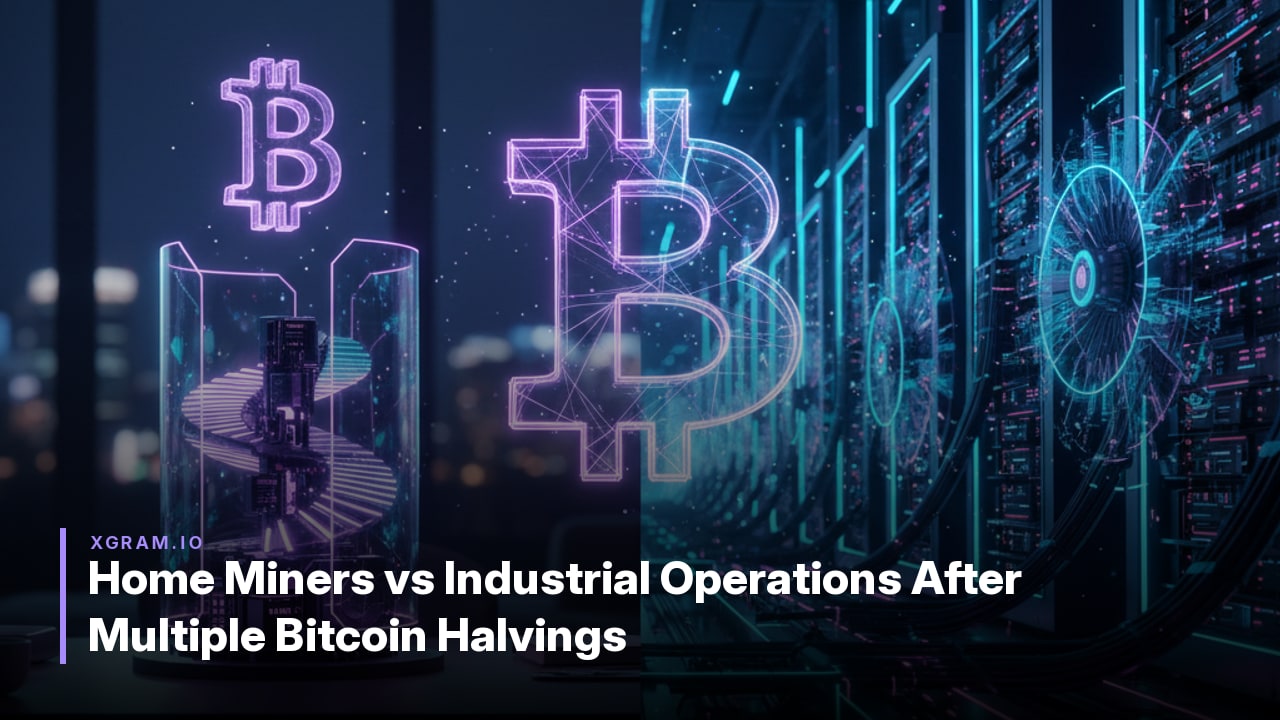
Home Miners vs Industrial Operations After Multiple Bitcoin Halvings


By Daniel Okafor · Reviewed by Priya Raman
TL;DR
Use home mining if you prefer a smaller, decentralized approach to Bitcoin mining; use industrial operations if you want efficiency and higher output. This article explores how both are impacted by rising costs and fee reliance after multiple Bitcoin halvings.
| Feature / Dimension | Home Miners | Industrial Operations | Winner |
|---|---|---|---|
| Initial Investment | Low to moderate | High | Home Miners |
| Scalability | Poor | Excellent | Industrial Operations |
| Energy Costs | Higher per unit | Lower per unit | Industrial Operations |
| Profit Margins | Variable | Stable | Industrial Operations |
| Operational Complexity | Low | High | Home Miners |
| Dependence on Fees | High | Moderate | Industrial Operations |
| Environmental Impact | Lower | Higher | Home Miners |
| Market Influence | Minimal | Significant | Industrial Operations |
What is Home Mining?
Home mining refers to the practice of individuals setting up their own mining rigs in residential settings to mine cryptocurrencies like Bitcoin. This approach typically requires a modest investment in hardware, such as ASIC miners, and is appealing for those who want to participate in the cryptocurrency ecosystem without significant overhead costs. While home miners can contribute to the network, their output is generally much lower than that of industrial operations due to limited resources and scalability.
In the wake of Bitcoin halvings, home miners face unique challenges. The reduction in block rewards means that profitability can be significantly affected, especially for those relying solely on mining for income. Furthermore, as energy costs continue to rise, home miners tend to see their profit margins dwindle, forcing them to rely increasingly on transaction fees for revenue.
What are Industrial Operations?
Industrial mining operations represent large-scale facilities that mine cryptocurrencies using numerous high-powered machines. These operations typically have the capital to invest in the latest mining technology and are often located in regions with cheap electricity, allowing them to achieve economies of scale. Industrial miners can produce vast amounts of Bitcoin daily, which significantly influences the overall market.
With every Bitcoin halving, industrial operations become more adept at optimizing their processes and leveraging their scale to maintain profitability. They can absorb the effects of reduced block rewards better than home miners, as their operational efficiencies often translate into lower per-unit mining costs. However, industrial operations also face scrutiny regarding their environmental impact, as their energy consumption can be substantial.
Key Differences
The key differences between home mining and industrial operations are shaped by their respective scales, economic viability, and operational efficiencies. Home miners typically invest less upfront and rely on their local electricity sources, which can be more expensive. In contrast, industrial operations make significant investments in both infrastructure and technology to maximize their output while minimizing costs.
As Bitcoin halvings continue to occur, the economic pressures faced by both groups diverge. Home miners, due to their smaller scale, are more susceptible to fluctuations in energy prices and Bitcoin's market value, while industrial operations often have contracts and relationships that buffer them from extreme market conditions.
Home Mining vs Industrial Operations: Detailed Comparison
Initial Investment
Home miners can start with a relatively low initial investment, typically purchasing a single or a few mining rigs. This accessibility is appealing for many new participants in the Bitcoin space. In contrast, industrial operations require significant financial backing to set up large-scale mining farms, making the entry barrier substantially higher.
Scalability
Scalability is a critical factor distinguishing home miners from industrial operations. Home miners usually face limitations on their ability to expand, often constrained by space, electricity availability, and hardware costs. Industrial operations, however, are designed for scalability, allowing them to continuously expand their operations as demand and profitability dictate.
Energy Costs
Energy costs are a significant operational expense for both miners, yet the structure of these costs varies dramatically. Home miners typically pay retail electricity rates, which can be high, especially in regions with expensive energy. Industrial operations often negotiate lower rates due to their bulk consumption, making their per-unit energy costs much lower, thus enhancing their profit margins.
Profit Margins
Profit margins for home miners can be highly variable, influenced heavily by Bitcoin’s price and the cost of electricity. As the block reward diminishes after halvings, home miners may find their operations unprofitable. Industrial miners, with more significant capital and operational efficiencies, enjoy more stable profit margins, allowing them to weather downturns in market conditions.
Operational Complexity
Home mining setups are relatively straightforward, often requiring basic technical knowledge to maintain hardware. Industrial operations, however, involve complex logistics, including hardware maintenance, software management, and regulatory compliance, making them more challenging to operate effectively.
Dependence on Fees
As Bitcoin halvings occur, home miners often find themselves increasingly reliant on transaction fees for their income, especially when block rewards decrease. Industrial operations, while also affected by fee structures, can mitigate this dependence through their larger volume of transactions and strategic positioning within the market.
Environmental Impact
Home miners tend to have a lower environmental impact compared to industrial operations, primarily because they often use renewable energy sources or minimal energy-intensive setups. In contrast, industrial operations, due to their scale, can contribute significantly to carbon emissions and energy consumption, leading to greater scrutiny from regulators and environmental advocates.
Market Influence
Home miners typically have little influence on the Bitcoin market due to their small output, which pales in comparison to industrial operations. The latter can affect market prices through their substantial production volumes, and their operational decisions can sway market sentiment.
Use Cases: Which One for What?
If you are considering entering the Bitcoin mining space, the decision between home mining and industrial operations depends on your goals:
- If you want a low-cost entry point: Home mining is your best option, offering a way to participate without high initial investments.
- If you seek scalability and efficiency: Industrial operations are preferable, as they leverage economies of scale to maximize output.
- If you prioritize sustainability: Home mining may appeal more, particularly if you can utilize renewable energy sources.
- If you want to influence the market: Industrial operations are the way to go, as they contribute significantly to overall Bitcoin production.
Pros and Cons of Each
Home Miners
- Pros: Low entry cost, easier operational management, reduced environmental impact.
- Cons: Limited scalability, higher energy costs, variable profit margins.
Industrial Operations
- Pros: Greater scalability, lower energy costs, stable profit margins.
- Cons: High initial investment, complex operational management, larger environmental footprint.
Final Verdict
In the landscape shaped by multiple Bitcoin halvings, the choice between home mining and industrial operations becomes clearer. For individuals seeking low-cost participation and simpler management, home mining remains a viable option. However, for those looking to capitalize on economies of scale and exert influence over the market, industrial operations are the dominant choice.
FAQ
Does home mining remain profitable after multiple halvings?
Profitability can be challenging due to reduced block rewards and rising energy costs, but some home miners can still achieve reasonable returns.
What are the main advantages of industrial mining?
Industrial mining operations benefit from lower energy costs, scalability, and more stable profit margins compared to home mining.
Can home miners compete with industrial operations?
While they can participate in the network, home miners generally cannot match the output and efficiency of industrial operations.
What strategies can home miners employ to remain profitable?
Home miners can look for cheaper energy sources, optimize their mining equipment, and stay informed about market trends to maximize their profits.
How does Bitcoin's price affect both mining types?
As Bitcoin's price fluctuates, both home miners and industrial operations experience changes in profitability, but industrial miners can better absorb these fluctuations.
For more insights on how smaller miners are affected in this environment, check out our detailed analysis on smaller miner impacts.

Private crypto swaps
Best rates. Secure. Wallet to wallet


 5 Min
5 Min