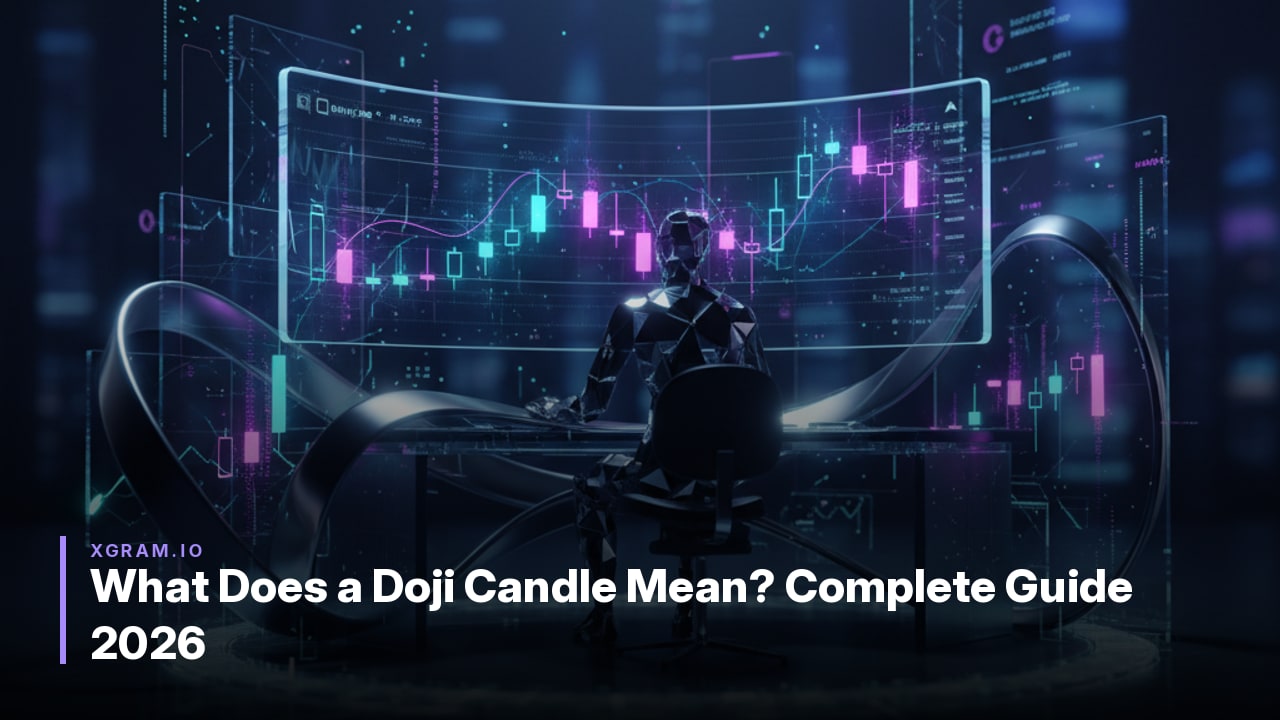
What Does a Doji Candle Mean? Complete Guide 2026


By Sophie Lindqvist · Reviewed by Claire Bennett
Introduction
Understanding what does a doji candle mean is crucial for traders who rely on candlestick patterns to analyze market trends. A doji candle, characterized by its unique shape, signals indecision in the market and can hint at potential reversals. In this comprehensive guide, we will explore the significance of doji candles, their variations, and how to effectively incorporate them into your trading strategy.
What is a Doji Candle?
A doji candle is a type of candlestick pattern found in technical analysis that represents a moment of indecision in the market. It forms when the opening and closing prices of an asset are virtually the same, resulting in a candle with a very small body and long wicks extending in both directions. The doji candle is a powerful indicator of market sentiment, often signaling a potential reversal or continuation of a trend.
Characteristics of a Doji Candle
- Small Body: The body of the doji candle is minimal, indicating that buyers and sellers are in equilibrium.
- Long Wicks: The presence of long upper and lower shadows shows that there was volatility in the market, but neither buyers nor sellers could gain control.
- Location Matters: The significance of a doji depends on its position in a trend; it can indicate potential reversals at market tops or bottoms.
Types of Doji Candles
Doji candles come in several varieties, each with its own implications. Understanding these types can help traders make informed decisions based on market conditions.
1. Standard Doji
This is the classic doji candle, where the opening and closing prices are nearly identical, suggesting indecision in the market.
2. Long-Legged Doji
The long-legged doji features long wicks on both sides, indicating significant volatility and an even stronger sense of indecision. Traders often view this pattern as a powerful reversal signal.
3. Gravestone Doji
A gravestone doji occurs when the open, low, and close prices are at the same level, with a long upper shadow. This pattern typically appears at the top of an uptrend and suggests a potential bearish reversal.
4. Dragonfly Doji
The dragonfly doji has a long lower shadow and no upper shadow, indicating that the market opened at a low price, traded lower, but then rallied to close at or near the opening price. This pattern typically appears at the bottom of a downtrend, signaling a potential bullish reversal.
Interpreting Doji Candles
To fully understand what does a doji candle mean, it’s essential to consider the context in which it appears. Here are key strategies for interpreting doji candles:
1. Trend Context
Identify the overall trend leading up to the doji candle. If it appears after a strong uptrend, it may signal a potential reversal to the downside. Conversely, a doji following a downtrend could suggest a bullish reversal.
2. Volume Confirmation
Volume can provide additional insights. A doji candle accompanied by high trading volume may indicate a stronger signal compared to one with low volume, suggesting that the market participants are more engaged at that point.
3. Follow-Up Candles
Always wait for confirmation from subsequent candles. A strong move in the direction opposite to the doji candle—especially if accompanied by high volume—can validate the reversal signal.
Using Doji Candles in Trading Strategies
Incorporating doji candles into your trading strategy can enhance your ability to predict market movements. Here are a few methods to consider:
1. Entry Points
- Wait for a doji candle to form in a significant support or resistance area.
- Look for confirmation in the following candle.
- Enter a trade in the direction suggested by the confirmation candle.
2. Stop-Loss Placement
Traders often place stop-loss orders just beyond the high or low of the doji candle. This strategy helps to minimize losses if the expected reversal does not occur.
3. Combining with Other Indicators
Doji candles work well in conjunction with other technical indicators, such as moving averages or RSI (Relative Strength Index). This multi-faceted approach can provide a more comprehensive view of market conditions.
Pros and Cons of Trading with Doji Candles
- Pros:
- Indicates indecision, which can be a signal for potential reversals.
- Works well in combination with other technical analysis tools.
- Simple to identify and understand for traders of all skill levels.
- Cons:
- Can lead to false signals if not confirmed by subsequent price action.
- Requires contextual understanding of market trends for effective use.
- Not a standalone indicator; should be part of a broader trading strategy.
Doji Candles in Cryptocurrency Trading
In the cryptocurrency market, where volatility is high, doji candles can be particularly significant. They can signal shifts in momentum that precede sharp price movements. For example, if a doji forms after a prolonged bullish trend in cryptocurrencies such as Bitcoin or Ethereum, it may indicate that the buying pressure is waning and a correction could be imminent.
Conversely, spotting a doji at the bottom of a downward trend could present an opportunity for bullish traders looking to capitalize on a potential market recovery.
Example Portfolio Allocation
A hypothetical example of a cryptocurrency portfolio that integrates doji candle signals might look like this:
- 40% Bitcoin (BTC): As the leading cryptocurrency, Bitcoin often shows strong trends that can be analyzed with doji patterns.
- 30% Ethereum (ETH): Ethereum's volatility can provide numerous opportunities for doji candle analysis.
- 20% Altcoins: Focus on emerging altcoins that may exhibit doji patterns during volatile periods.
- 10% Stablecoins: Holding stablecoins can provide liquidity for potential trades based on doji signals.
Conclusion
Understanding what does a doji candle mean is essential for traders seeking to harness the power of candlestick patterns in their trading strategies. By recognizing the characteristics and implications of doji candles, traders can make more informed decisions and better navigate the complexities of the cryptocurrency market. Remember to combine doji analysis with other indicators and market context for optimal results.
What are your thoughts on using doji candles in trading? Share your opinions in the comments below!
This article is not financial advice.

Private crypto swaps
Best rates. Secure. Wallet to wallet


 5 Min
5 Min