Top Centralized Exchanges to Trade Monero (XMR) in 2026


Despite this, several centralized exchanges still support XMR trading, deposits, and withdrawals in 2026 — either due to more flexible jurisdictions, no-KYC policies, or niche focus. This article lists the top centralized platforms where XMR remains actively traded, with current status, supported pairs, fees, liquidity, regional availability, KYC requirements, and important notes. Information is based on platform policies as of June 2026 and may change — always verify directly on the exchange before use. This is not financial advice; DYOR and comply with local regulations.
Current Landscape of XMR on Centralized Exchanges in 2026
Monero has been delisted or restricted on many major CEX through 2025 — over 70 exchanges in total — driven by exchange-level compliance decisions weighing regulatory risk, not a government ban on the asset itself:
- Binance, Coinbase, Bitfinex, Bitstamp, Gemini, KuCoin (partial), OKX (EU), Huobi — no XMR trading/withdrawals in regulated regions
- Remaining support is concentrated on mid-tier, no-KYC-friendly, or offshore platforms
- Daily XMR volume across all exchanges: ~$150–$300 million (CoinGecko/CoinMarketCap data)
- Top pairs: XMR/USDT, XMR/BTC (fiat pairs rare)
Below are the top centralized exchanges still supporting XMR in 2026, ranked by liquidity and reliability for trading.
1. MEXC — Highest Liquidity with Flexible Limits
MEXC remains one of the most active platforms for XMR trading in 2026.
- Supported pairs: XMR/USDT, XMR/BTC
- 24h volume (XMR): often $20–$60 million (top-tier for privacy coins)
- KYC: No mandatory KYC for trading and withdrawals up to certain daily limits (~$10,000–$30,000/day, policy subject to change)
- Fees: 0.00–0.20% maker/taker (VIP levels reduce further)
- Regional availability: Global (except restricted countries: US, CN, etc.)
- Notes: Fast deposits/withdrawals, high leverage futures (if available), strong API for bots. Policy changes possible — check current limits before large trades.
2. KuCoin — Still Supports XMR in Many Regions
KuCoin continues to offer XMR trading in 2026, though with restrictions in some jurisdictions.
- Supported pairs: XMR/USDT, XMR/BTC, XMR/ETH
- 24h volume (XMR): $10–$40 million
- KYC: Trading without full KYC is possible, but as of 2026 KuCoin requires Level 2 verification for privacy-coin (XMR) withdrawals; basic limits up to ~1–2 BTC equivalent per day (limits tightened in 2025)
- Fees: 0.1% spot (reduced with KCS or VIP)
- Regional availability: Global (restricted in US, CN, some EU countries)
- Notes: Good liquidity, futures/perpetuals available, mobile app. EU users may face restrictions under MiCA — check access.
3. Gate.io — Reliable Mid-Tier Option
Gate.io maintains XMR support with decent liquidity.
- Supported pairs: XMR/USDT, XMR/BTC
- 24h volume (XMR): $5–$20 million
- KYC: No KYC for small withdrawals (~$10,000–$20,000/day); higher limits require verification
- Fees: 0.2% spot (lower with GT or VIP)
- Regional availability: Global (US restricted)
- Notes: Wide range of pairs, futures, staking options. Stable platform with good security history.
4. TradeOgre — Classic No-KYC Exchange
TradeOgre is a long-standing no-KYC platform that still actively supports XMR in 2026.
- Supported pairs: XMR/BTC, XMR/USDT
- 24h volume (XMR): $0.5–$5 million (lower but consistent)
- KYC: None required
- Fees: 0.2% flat
- Regional availability: Global
- Notes: Simple interface, privacy-focused, no fiat ramps. Suitable for small-to-medium trades. Lower liquidity means wider spreads.
5. NonKYC.io & Other Niche No-KYC CEX
Dedicated no-KYC platforms continue to support XMR.
- NonKYC.io — built specifically for no-KYC trading, supports XMR deposits/withdrawals
- Other: smaller platforms (e.g., Finexbox, SafeTrade) occasionally list XMR
These platforms offer full no-KYC access but have lower liquidity and higher platform risk (exit scams, downtime).
Other Ways to Get XMR on Centralized Platforms
If direct XMR trading is restricted on your preferred exchange, indirect methods are common:
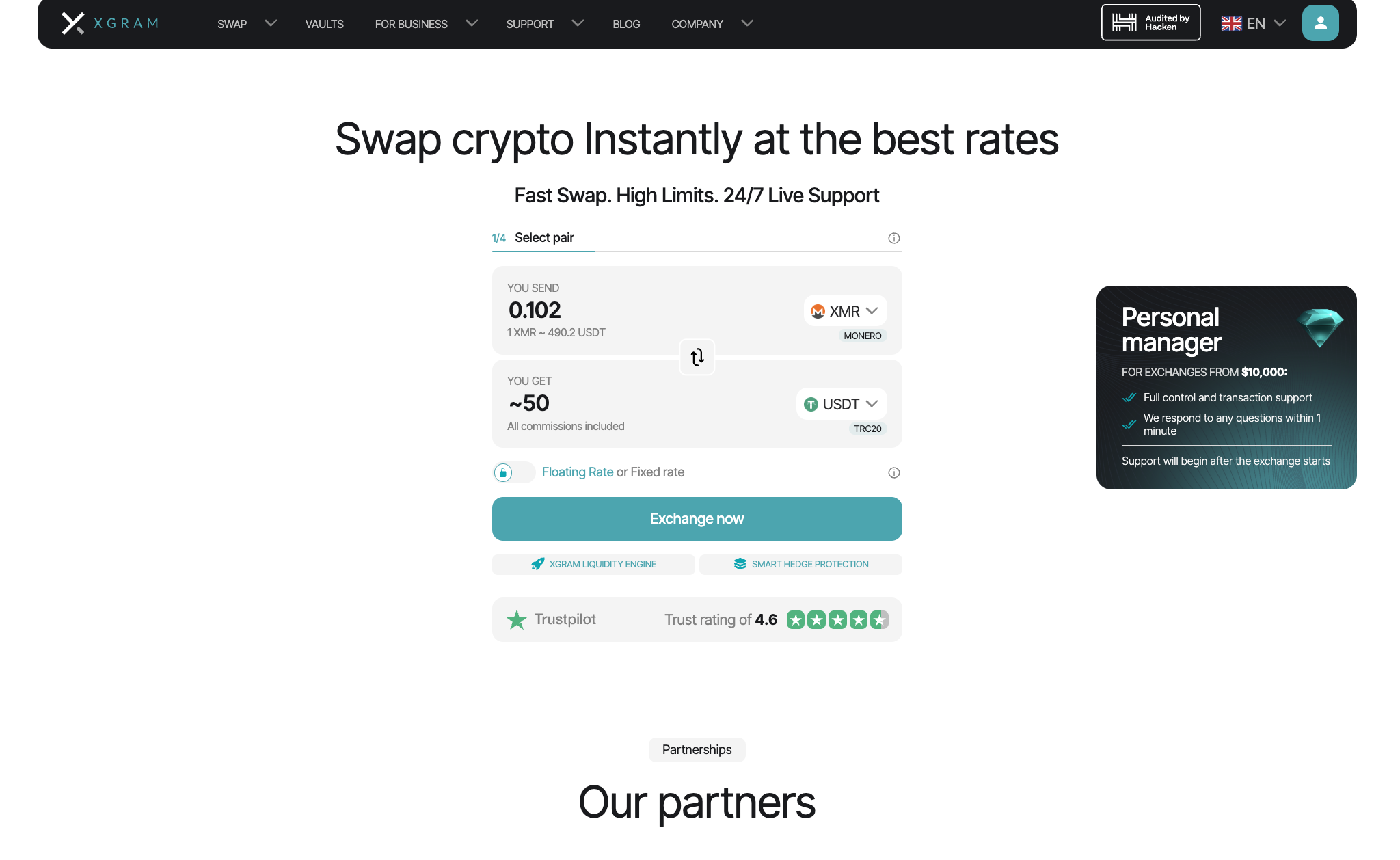
- Buy BTC/USDT/ETH on regulated CEX (Coinbase, Kraken, Binance) → transfer to no-KYC platform → swap to XMR (via Xgram.io)
- Use fiat-to-crypto ramps on no-KYC P2P (AgoraDesk, Bisq) → swap to XMR
Key Considerations for Trading XMR on CEX in 2026
- Regulatory risk: Platforms can delist XMR or introduce KYC overnight — check status before depositing
- Withdrawal limits: No-KYC tiers usually cap at $10k–$30k/day
- Privacy impact: CEX deposits/withdrawals create on-chain links — use fresh subaddresses and withdraw to private wallet immediately
- Fees: Spot trading 0.1–0.2%, withdrawal fees vary ($0.01–$0.1 XMR typical)
- Safety: Use 2FA, hardware wallet for large amounts, never leave funds on exchange long-term
Conclusion
In 2026, trading Monero on centralized exchanges is limited to a handful of platforms with flexible KYC policies or no-KYC tiers: MEXC, KuCoin, Gate.io, TradeOgre, Kraken (for clients outside the European Economic Area, including the US), and niche sites like NonKYC.io. Liquidity remains decent on MEXC and KuCoin, while TradeOgre and others offer pure no-KYC access. For users in regulated regions (EU, US), indirect methods (fiat → BTC/USDT → XMR swap) via non-custodial aggregators or DEX are often the only viable path. Always verify current exchange policies, use privacy tools (Tor/VPN, fresh addresses), and withdraw to self-custody immediately. Monero's privacy value depends on how you acquire and hold it.

Private crypto swaps
Best rates. Secure. Wallet to wallet

 5 Min
5 Min