How THORChain Lets You Swap Bitcoin Pseudonymously (No Account, No KYC – 2026 Guide)


As of June 2026, Bitcoin remains the most transparent major cryptocurrency — every transaction is permanently recorded on a public ledger that chain analysis firms like Chainalysis can trace with increasing accuracy. With illicit flows reaching record levels in 2025 (Chainalysis estimates $154 billion to illicit addresses) and regulators expanding blockchain surveillance, many users seek ways to move BTC value without creating an obvious, permanent footprint.
THORChain offers one of the cleanest, most decentralized paths for this: native cross-chain swaps directly from your non-custodial wallet — no KYC, no accounts, no wrapped tokens, no centralized intermediary holding your funds.
This guide explains how THORChain achieves meaningful privacy for Bitcoin swaps, why it's not perfect anonymity, the step-by-step process to minimize your trace, best practices in 2026, risks, and realistic expectations.
Why THORChain for Bitcoin Privacy in 2026?
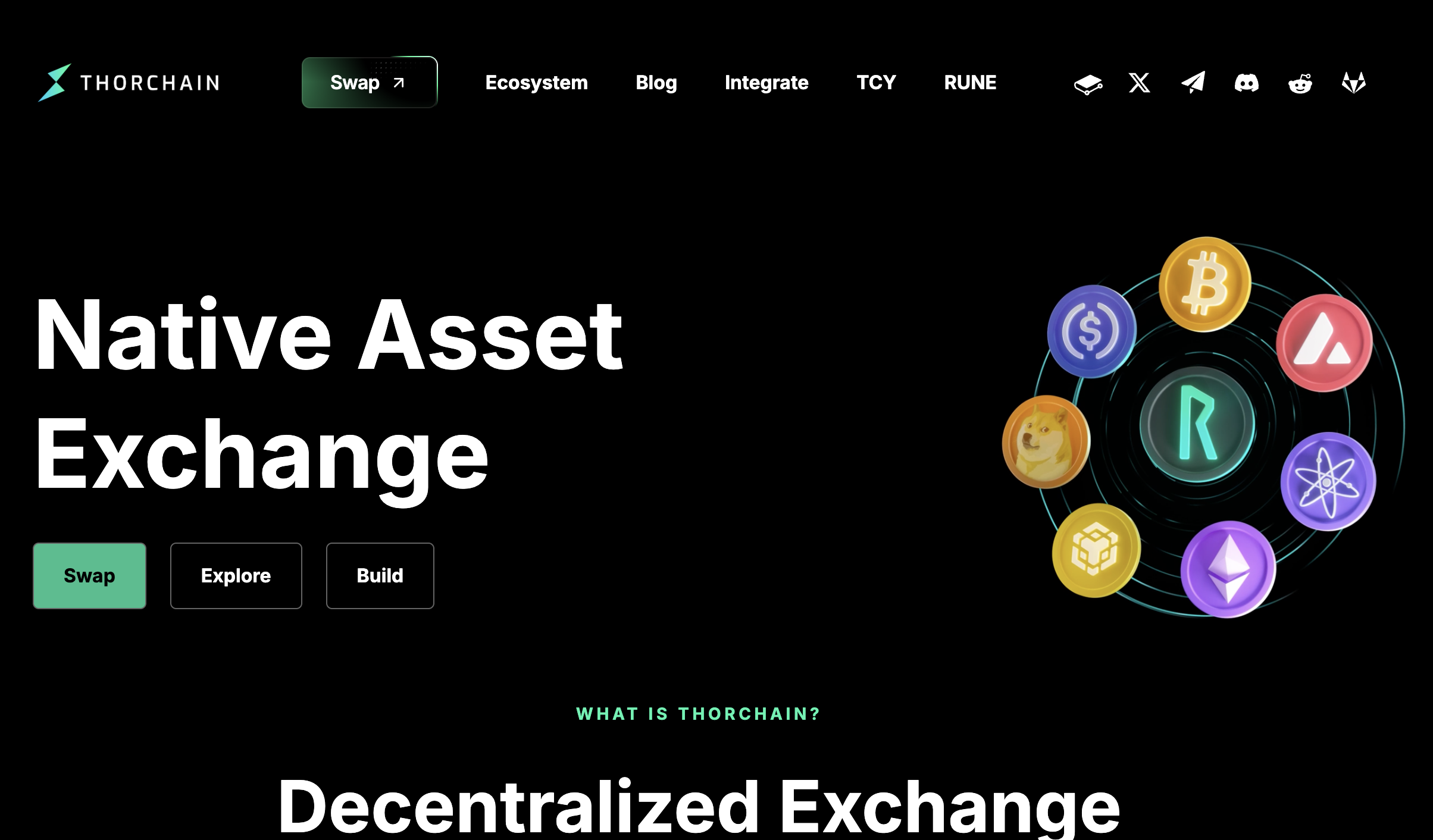
THORChain is a decentralized liquidity protocol that enables native asset swaps across blockchains (BTC ↔ ETH, BTC ↔ stablecoins, BTC ↔ altcoins, etc.) using continuous liquidity pools secured by RUNE bonds and nodes.
Key privacy-relevant features:
- No KYC / No accounts — You never create a profile or submit ID.
- Non-custodial — Funds never leave your control; inbound tx is observed and outbound sent atomically.
- Native BTC — You send real BTC from your wallet (no WBTC or bridges), receive real BTC or other native assets.
- No centralized honeypot — Unlike CEXs, there's no single entity that can be subpoenaed for your full history.
- Memo-based instructions — Swap parameters (destination, limit, affiliate) are embedded in the on-chain memo field on the source chain.
However — important reality check:
THORChain transactions are public on both source and destination chains. Chainalysis and similar firms can (and do) observe inbound BTC to THORChain vaults and outbound assets. The protocol itself does not obfuscate the flow — privacy comes from breaking chain-of-custody assumptions and avoiding centralized data collection.
In 2026, THORChain swaps are considered pseudonymous with medium privacy — significantly better than CEX → CEX, but not Monero-level unlinkability.
How THORChain Swaps Work (Privacy Perspective)
- You send BTC from your wallet to a THORChain vault address on Bitcoin network.
- The memo field contains instructions (e.g., :swap:ETH.ETH:0xYourAddress:lim:1.05).
- Nodes observe, reach consensus, execute swap from liquidity pool.
- Output asset (ETH, USDC, etc.) is sent directly to your specified address.
Privacy wins:
- No single entity logs your email/IP/KYC.
- No on-chain link between your identity and the swap unless you reuse addresses or have off-chain correlation.
Privacy limits:
- Vault addresses are public → analysts can cluster inflows/outflows.
- If you send from a previously KYC-linked BTC address → the link persists.
- Destination address receives funds → same traceability issues as any on-chain receipt.
Step-by-Step: Minimizing Your Footprint When Swapping BTC via THORChain
Preparation (Max Privacy Setup)
- Use a fresh, unlinked BTC wallet Create a new seed on an air-gapped device (e.g., Coldcard, Jade) or software wallet in offline mode. Never send from addresses tied to KYC exchanges or previous activity.
- Acquire BTC privately
- P2P (Bisq, Hodl Hodl, RoboSats)
- Cash-by-mail or in-person (high trust/risk)
- Privacy route: fiat → XMR → BTC via no-KYC swap (Trocador, Godex, etc.)
- Use Tor / VPN / new IP for all interactions. THORChain front-ends (swap.thorchain.org, THORSwap, etc.) can be accessed via Tor.
- Choose interface
- Official: swap.thorchain.org (simple, no connect)
- THORSwap (app.thorswap.finance) — advanced streaming swaps
- Wallet integrations: Ledger, Keplr, Trust Wallet, Edge, etc. (some allow direct memo entry)
Executing the Swap (BTC → ETH Example)
- Go to swap.thorchain.org (or your chosen front-end).
- Select BTC as source, ETH as destination.
- Enter destination ETH address (fresh, unlinked recommended).
- Set optional minimum receive (slippage protection) and affiliate if desired.
- Choose Streaming Swaps (recommended for large amounts) — breaks trade into many small sub-swaps over blocks → better average price, harder to front-run.
- Copy the generated deposit address (Bitcoin vault) and exact memo.
- From your BTC wallet, send the exact amount to the vault address with the memo in the OP_RETURN field (most wallets support this).
- Wait 5–30 minutes (confirmation + processing time). Output arrives directly in your ETH address.
Privacy tip: Use streaming swaps for larger amounts — the incremental nature makes timing-correlation harder for analysts.
Alternative: Wallet-integrated swaps Many wallets (Edge, Ledger via new app, Trust Wallet) now support direct THORChain swaps — you input amount/destination, wallet crafts the tx + memo automatically.
Best Practices for Maximum Privacy (2026)
- Never reuse addresses — generate fresh receive addresses for every major step.
- Break the chain multiple times if needed: BTC → THORChain → XMR (via no-KYC swap) → new BTC wallet.
- Avoid correlated timing / amounts — don't swap round numbers or immediately after receiving funds.
- Use hardware wallets for signing — keep seeds offline.
- Tor browser for all web front-ends.
- Streaming swaps for >0.1 BTC — reduces MEV risk and spreads the footprint.
- Monitor via privacy explorers (if paranoid) — avoid standard block explorers that log your IP.
Risks & Limitations
- On-chain observability — Vault inflows/outflows are public; sophisticated analysis can cluster and de-anonymize.
- Liquidity / Slippage — Large swaps can move prices; use limits and streaming.
- Front-running / MEV — Streaming helps, but not immune.
- Regulatory attention — High-volume THORChain flows are monitored; avoid patterns that flag AML systems.
- Node / Vault risk — Decentralized, but 51% node collusion theoretically possible (mitigated by RUNE bonding/slashing).
Conclusion: Is THORChain "Private Enough" for Bitcoin in 2026?
THORChain excels at permissionless, non-custodial, native BTC swaps without KYC or centralized data collection — a huge step up from CEXs. It breaks simple chain-of-custody assumptions and avoids honeypots.
But it is not strong privacy like Monero or Railgun/Aztec shielded pools. If your threat model requires unlinkability, combine THORChain with Monero hops or other mixers.
For most users wanting to move BTC value privately without handing over ID or trusting a company — THORChain remains one of the strongest, most liquid options in 2026.
What’s your go-to method for private BTC movement right now? Have you used THORChain swaps? Share your experience in the comments.
Data & observations as of February 2026. This guide is informational only — not financial, legal, or privacy advice. DYOR and consider your threat model.

Private crypto swaps
Best rates. Secure. Wallet to wallet


 5 Min
5 Min