Why 2026 Is the Year of Commodity-Backed Tokens


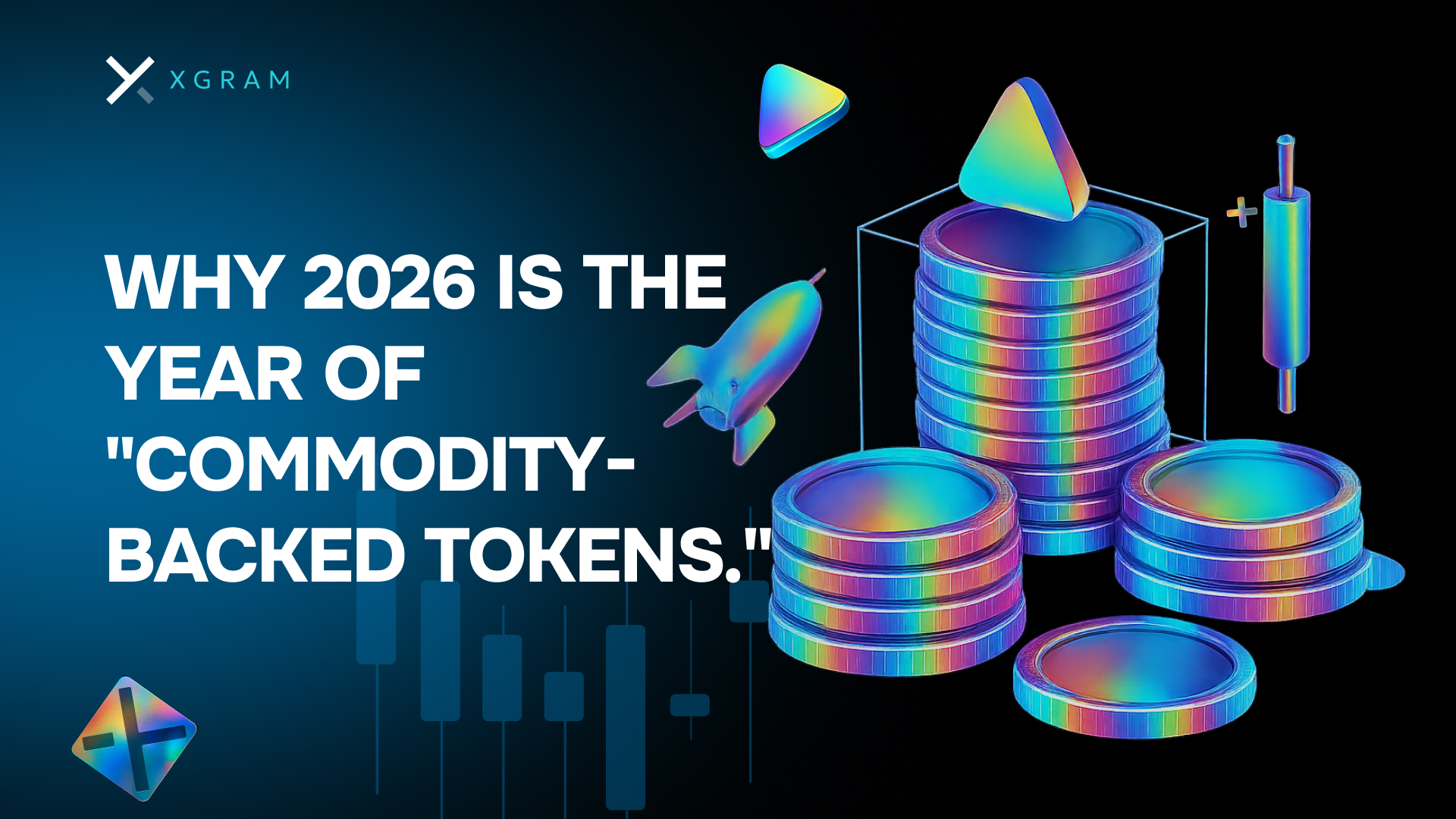
The cryptocurrency landscape in 2026 is witnessing a paradigm shift, with commodity-backed tokens emerging as one of the most transformative trends in the real-world assets (RWA) sector. Commodity-backed tokens are digital assets tokenized on blockchain networks and backed 1:1 by physical commodities like gold, silver, oil, agricultural products, or metals. These tokens represent ownership claims on real-world commodities stored in secure, audited vaults, allowing users to trade, hold, or use them in decentralized finance (DeFi) protocols without the logistical challenges of physical possession.
Why 2026 specifically? The year marks a confluence of regulatory clarity, technological maturation, institutional adoption, and market demand that positions commodity-backed tokens not just as niche experiments, but as mainstream financial instruments. According to data from RWA.xyz and Chainlink (as of early January 2026), the tokenized RWA market (excluding stablecoins) has reached $19–$36 billion, with commodity tokens — particularly gold — accounting for about $4–$5 billion of that value. Forecasts from Boston Consulting Group (BCG) project tokenized assets could hit $16 trillion by 2030, while McKinsey estimates a more conservative $2–$4 trillion, with commodities like gold and oil making up 15–20% of the segment. Standard Chartered and Messari are even more optimistic, predicting $30 trillion and $10 trillion, respectively, by 2030, with 2026 as a breakout year for adoption.
This surge is driven by several factors. First, the passage of the GENIUS Act in the US in July 2025 provided a comprehensive framework for stablecoins, which indirectly boosted confidence in commodity-backed assets by clarifying that permitted payment stablecoins are neither securities nor commodities. In the EU, the full implementation of the Markets in Crypto-Assets (MiCA) regulation in 2025 has created a unified rulebook across 27 member states, reducing fragmentation and enabling cross-border tokenization. Singapore's Project Guardian and the UAE's VARA framework have similarly accelerated tokenized commodity markets in Asia and the Middle East.
Second, institutional players — BlackRock, Franklin Templeton, JPMorgan, Citigroup, HSBC, and Goldman Sachs — have poured billions into tokenized assets. BlackRock's BUIDL fund alone surpassed $1.8 billion in AUM by late 2025, distributing over $100 million in dividends. Tokenized Treasuries dominate RWAs at $8.7 billion+, but commodities like gold have grown 227% in key periods (RWA.xyz data), with PAXG and XAUT leading at ~$1.77B and $1.88B market caps respectively.
Third, technological advancements — multi-chain support (Ethereum, TRON, TON), zero-knowledge proofs for privacy-enhanced tokenization, and oracle networks like Chainlink for real-time commodity pricing — have made commodity-backed tokens more efficient and secure. For example, XAUT's multi-chain deployment reduces gas fees to <$1 on TRON, compared to $5–$20 on Ethereum.
Fourth, macroeconomic conditions — persistent inflation (3–4% in major economies per IMF 2025), geopolitical tensions, and central bank gold buying (500–600 tonnes/quarter) — drive demand for commodity hedges. Tokenized commodities offer fractional ownership (e.g., $1 worth of gold), 24/7 liquidity, and DeFi composability (lending for 3–5% APY on Aave).
Fifth, environmental considerations play a role. Traditional gold mining emits ~0.9 tonnes CO2e per ounce (WGC 2025), but tokenized gold avoids new extraction by using existing stocks, reducing demand-side pressure (NatGold model avoids ~800 kg CO2e/oz). This aligns with ESG mandates for institutions.
These factors converge in 2026, making it the year when commodity-backed tokens transition from pilots to standard financial products. The tokenized commodity market could reach $10–$20 billion by year-end (Messari forecast), up from $4–$5 billion in early 2026. But to understand why, let's dive deeper into the building blocks.
What Are Commodity-Backed Tokens?
Commodity-backed tokens are blockchain-based digital assets that represent ownership or claims on physical commodities. They are a subset of RWAs, where the underlying asset is a commodity rather than financial instruments (Treasuries) or illiquid assets (real estate). The backing is typically 1:1, meaning each token is redeemable for a specific amount of the commodity, stored in audited vaults.
Common examples in 2026:
- Gold tokens: PAXG (Paxos, ~$1.77B cap), XAUT (Tether, ~$1.88B cap), KAU (Kinesis, ~$300–$400M cap). Each token = 1 troy ounce or gram of LBMA-standard gold.
- Silver tokens: KAG (Kinesis Silver, ~$100–$200M cap), SLVon (smaller niche tokens).
- Oil and energy: Emerging tokens like tokenized oil futures or carbon credits (KlimaDAO, Toucan Protocol), but still small (~$500M combined cap).
- Agricultural and metals: Tokenized coffee, copper, lithium (via platforms like Centrifuge, Credix for commodity-backed credit), market ~$300M.
How they work:
- Issuance: Issuer buys/stores physical commodity in vaults (Brink's, Swiss banks).
- Token minting: Smart contracts create ERC-20/TRC-20 tokens on blockchain.
- Audits: Third-party (KPMG, BDO) verify 1:1 backing monthly/quarterly.
- Trading: Tokens trade on CEX/DEX 24/7, used in DeFi (lending, pools).
- Redemption: Large holders burn tokens for physical delivery (min 430 oz ~$2M, plus fees).
Unlike stablecoins (fiat-backed), commodity-backed tokens track commodity prices, not $1 peg. They benefit from blockchain's fractionalization, programmability, and efficiency.
The sector's growth: From $2B in 2024 to $4–$5B in 2026 (RWA.xyz), commodities make up 20–25% of tokenized RWAs (excluding stablecoins).
Historical Context and Evolution of Commodity-Backed Tokens
Commodity tokenization isn't new — Digix Gold (DGX) launched in 2014 but failed due to high fees and low adoption. The 2017 ICO boom saw early experiments, but scalability issues limited scale. The 2021–2022 DeFi summer sparked interest in yield-bearing RWAs, but 2022's crypto winter delayed progress.
2023–2024 marked the turning point:
- Ethereum's Dencun upgrade (March 2024) reduced L2 fees, enabling cheap token transfers.
- Stablecoin clarity (US GENIUS Act 2025) boosted confidence in backed assets.
- Institutional pilots: BlackRock BUIDL (Treasuries, but paved way for commodities), JPMorgan Onyx tokenized gold trades.
- Gold tokens boom: PAXG/XAUT grew 227% in 2025 (RWA.xyz).
2025 saw acceleration:
- MiCA full implementation (EU) provided framework for asset-referenced tokens (ARTs), classifying commodity tokens as ARTs if stable (e.g., gold peg).
- US FIT21 Act (2025) clarified commodity status for non-security tokens.
- Asia/UAE adoption: Singapore MAS Project Guardian tokenized oil/gold; Dubai VARA licensed commodity RWA platforms.
- DeFi integration: Aave/Compound pools for XAUT/KAU yield ~3–5% APY.
This evolution set the stage for 2026 as the year commodity-backed tokens go mainstream: from $4–$5B to projected $10–$20B (Messari 2026 outlook), driven by 50–100% YoY growth in tokenized Treasuries/commodities.
Regulatory Developments Making 2026 Pivotal
Regulation is the single biggest catalyst for 2026 as the year of commodity-backed tokens. 2025's laws created clarity, enabling institutional capital.
- US GENIUS Act (July 2025): Comprehensive stablecoin framework, but commodity tokens classified as digital commodities under CFTC if not securities. This allows tokenized gold/oil as commodity derivatives without SEC registration if compliant. Result: tokenized Treasuries surged to $8.7B, commodities followed with $1.2B in gold tokens.
- EU MiCA (full force 2025): Defines ARTs (asset-referenced tokens) — commodity tokens like PAXG/XAUT fall under ART if stabilized (gold peg). Requires issuer licensing, 1:1 reserves, audits, whitepapers. 53 CASPs licensed by 2026 (ESMA data), enabling cross-EU tokenization. ESMA pilots for tokenized bonds/real estate in 2025 expanded to commodities in 2026.
- Singapore MAS Project Guardian: 2025 pilots tokenized oil/gold, 2026 full rollout with $50B+ tokenized assets (MAS estimate). Focus on interoperability.
- UAE VARA/DMCC: Licensed tokenized gold (CGO Shariah-compliant), plans for oil tokens in 2026.
- Hong Kong SFC: Approved tokenized commodities as virtual assets, with $2B pilot volume in 2025.
- Global FATF Travel Rule: Compliant commodity tokens must implement (sender/receiver info for >$1,000 transfers), but privacy-focused designs (zk-proofs) help.
These frameworks reduced uncertainty: tokenized RWAs grew from $3B in 2022 to $18B in 2025 (DWF Labs data), with commodities at $1.2B (gold 80%). 2026 projections: $100B+ RWA, 20% commodities ($20B).
Institutional Adoption and Market Growth in 2026
Institutions are the driving force.
- BlackRock, Franklin Templeton: BUIDL ($1.68B AUM), BENJI — Treasuries, but 2025 pilots tokenized gold/commodities with $100M+ volume.
- JPMorgan, Citigroup, HSBC: Onyx/JPM Coin tokenized gold trades, 2026 expansion to oil/carbon.
- Goldman Sachs, UBS: Tokenized commodity funds, $500M+ AUM in 2025, projected $2B in 2026.
- BRICS/Aligned Economies: Tokenized oil/gold for trade settlement, reducing USD dependence.
Adoption stats: Institutional crypto investments >$500B in 2025 (Grayscale), RWAs 10–15% share. 2026 forecast: $1T+ institutional crypto, 20–30% RWAs/commodities.
Benefits of Commodity-Backed Tokens
Fractional ownership, 24/7 liquidity, programmability, reduced storage costs, DeFi composability, global access.
Risks and Challenges
Counterparty risk, regulatory changes, liquidity risk, smart contract vulnerabilities, backing verification.
Case Studies
PAXG growth, XAUT multi-chain, KAU yield model.
Future Outlook Beyond 2026
$16T tokenized by 2030 (BCG), commodities 15–20% ($2–$3T), driven by AI-oracles, zk-proofs, CBDC integration.
Conclusion
2026 is shaping up as the year commodity-backed tokens go mainstream, driven by regulatory clarity, institutional capital, tech advancements, macro demands, and sustainability needs. From $4–$5B to $10–$20B, the sector could see 2–5x growth, making it a key narrative in crypto. However, success depends on overcoming risks and maintaining trust in backing/audits. For users, commodity-backed tokens offer new ways to access real assets digitally, but as with any innovation, thorough due diligence is essential.

Private crypto swaps
Best rates. Secure. Wallet to wallet

 5 Min
5 Min